Bunny Behavior Explained: What Your Rabbit Is Telling You
Bunny behavior is mostly body language. Rabbits tell you how they feel with their ears, posture, feet and teeth: a twisting leap in the air means joy, a sudden flop onto the side means total relaxation, and a loud thump of the back feet means "something is wrong."
Rabbits are prey animals, and they tend to hide fear and pain. That makes reading them a skill worth learning. This guide explains the most common bunny behaviors, groups them into a quick-reference chart, and flags the signs that mean it's time to call your vet.
Happy bunny behavior
These are the signs that your rabbit feels safe and content.
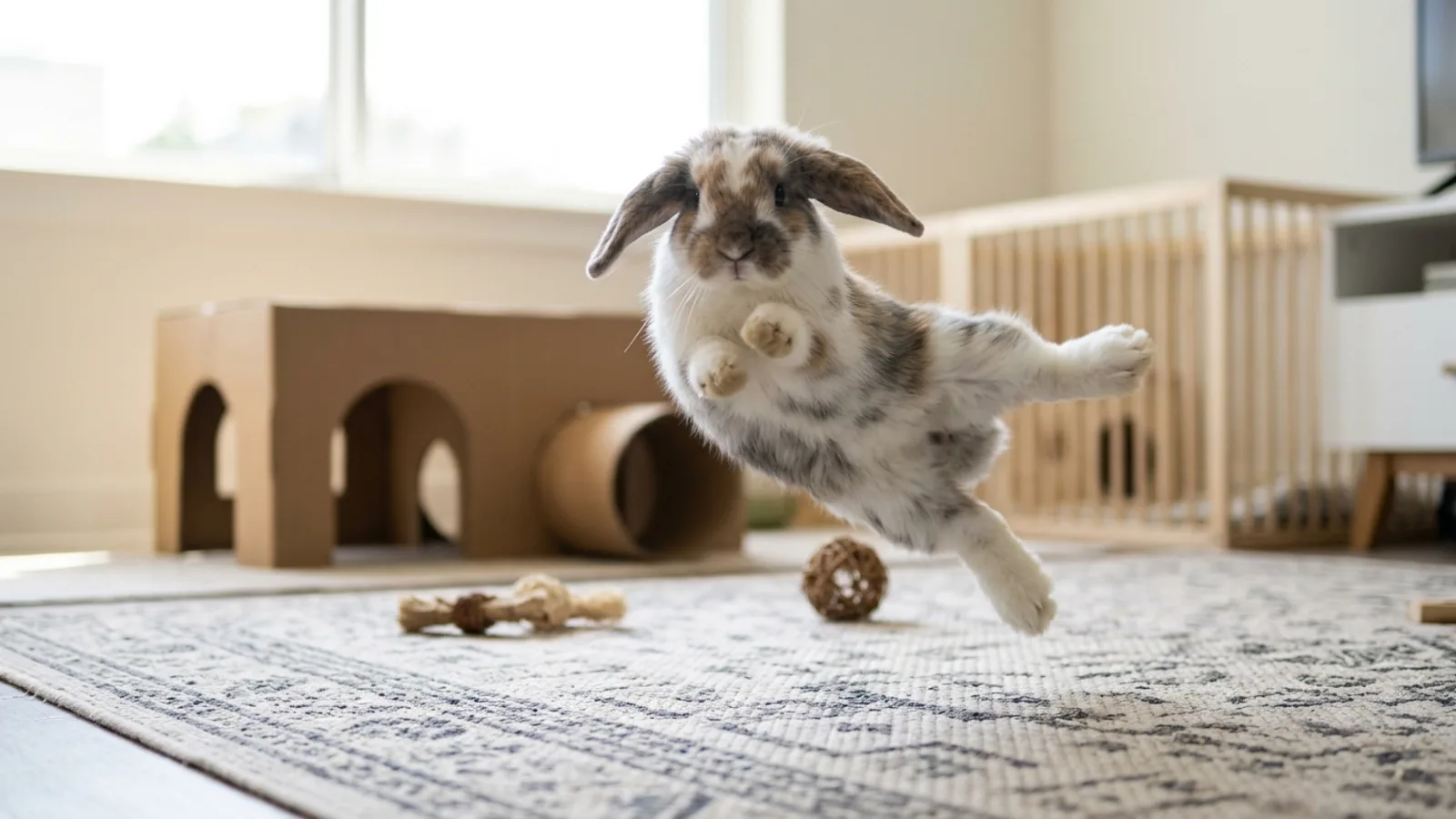
- Binky. The RSPCA (Australia) describes binkying as leaping with all four paws off the ground and twisting mid-air, a sign of happiness or excitement. Rabbit.org calls quick leaps and mid-air turns "dancing": pure joy.
- Flopping. Rabbit.org says a rabbit that falls over onto its side is completely relaxed. It can look alarming the first time, but it's a compliment.
- Lying stretched out. The RSPCA lists lying fully stretched out, back legs behind and front paws forward, as relaxed, along with lying with legs tucked under the body.
- Soft tooth grinding. Rabbit.org describes gentle tooth grinding as contentment ("I'm very happy").
- Licking you. A sign of trust, according to Rabbit.org.
- Grooming. The RSPCA (UK) says calmly grooming themselves or a bonded rabbit is another sign of being content.
- Nose twitching and exploring. The PDSA lists hopping around, exploring and eating, with constant nose movement, among signs of a happy rabbit.
Communication and social behaviors
Some bunny behaviors aren't about mood so much as conversation.
- Chinning. Rabbits rub their chins on objects to scent-mark them. Rabbit.org translates it as "This is my home," and the RSPCA (UK) notes rabbits use chin secretions, urine and droppings to communicate by scent.
- Nose nudge. Rabbit.org says a nudge can mean "pet me" or "move out of the way."
- Circling your feet. An invitation to play or court, per Rabbit.org. It often comes with honking, which Rabbit.org links to excitement.
- Mounting. Rabbit.org says it can assert dominance, be hormonal, or reflect a feisty mood. The Rabbit Welfare Association & Fund recommends neutering both sexes, ideally by 6 months of age, to reduce spraying and territorial behavior.
- Nipping. According to Rabbit.org, a nip can be affectionate grooming, an objection, dominance or mating interest. Context tells you which.
- Digging and chewing. Both are normal. The RSPCA (UK) says digging is a natural behavior and chewing keeps teeth the right shape and size, so give your rabbit a dig box and safe chews rather than trying to stop it.
Alert, worried and unhappy signs
- Thumping. The PDSA says rapid thumps of the back legs began as a warning to other rabbits and signal that a rabbit feels threatened or unhappy.
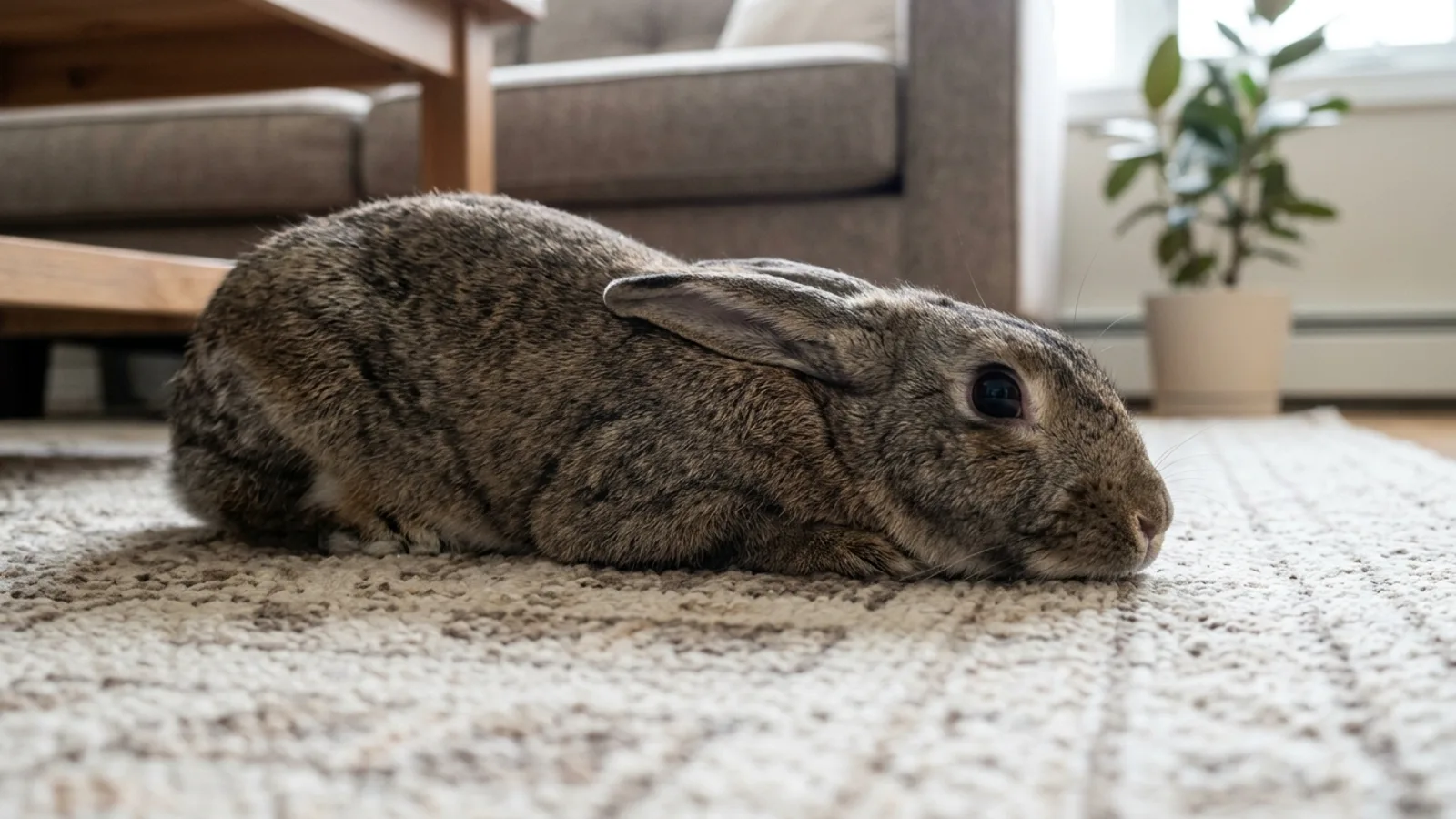
- Ears pressed flat, body low and tense. The RSPCA (Australia) describes a crouched rabbit with tense muscles, head low, ears flat against the back and dilated pupils as worried and wanting space.
- Freezing. The PDSA notes a brief freeze when startled is normal, but staying immobile is a strong sign of unhappiness.
- Hiding. Often fear. The PDSA advises not pulling the rabbit out, and instead placing a favorite vegetable or toy nearby to encourage it out.
- Turning away with a flick of the back feet. The RSPCA (Australia) reads this as "please leave." Rabbit.org adds that a raised, swishing tail while walking off is a sassy protest.
Angry or frightened: back off
- Boxing. Sitting up and striking with the front paws, sometimes with a growl (PDSA, RSPCA Australia).
- Lunging. Rabbit.org describes ears back, chin forward and tail up as a warning to back off.
- Growling or grunting. Rabbit.org reads a growl as "I don't trust you."
- Showing front teeth. The PDSA calls this an extreme sign of fear and a final warning.
- Screaming. Rabbit.org says this means severe pain or terror. Treat it as an emergency.
When you see these, give your rabbit space. The RSPCA (UK) says never to shout at or punish a rabbit, because it tends to increase fear and anxiety.
Bunny behavior chart: quick reference
| You see or hear | It usually means | What to do |
|---|---|---|
| Binky | Joy, excitement | Enjoy it; give room to run |
| Flop onto side | Fully relaxed | Let them rest |
| Soft tooth grinding | Content | Keep going |
| Licking you | Trust | Return the affection gently |
| Chinning objects | Marking territory | Normal; no action |
| Nose nudge | "Pet me" or "move" | Check the context |
| Circling, honking | Playful, courting | Play; consider neutering if constant |
| Thumping | Alarm, threat sensed | Look for the cause (noise, other pet) |
| Ears flat, body low, frozen | Afraid | Lower your voice, give space |
| Boxing, lunging, growling | Angry, defensive | Back off; don't punish |
| Loud tooth grinding, hunched | Possible pain | Call your vet |
| Screaming | Severe pain or terror | Call your vet now |
When bunny behavior means pain or illness
The difference between happy and hurting can be subtle. Rabbit.org notes that soft tooth grinding signals contentment, while tooth chattering signals pain. The RSPCA (UK) says loud teeth grinding can indicate pain, and lists other possible signs: runny or sore eyes, stiffness or difficulty walking, head tilting, sudden changes in appetite, low mood or lethargy, fewer droppings or dark sticky droppings, and breathing changes.
The PDSA adds that a hunched rabbit with chin tucked in and nose not twitching is showing stress, because that is not a normal position for a rabbit. Both the PDSA and the RSPCA say any unexplained change in behavior is worth a vet check, and the RSPCA (UK) advises ruling out health problems with your vet first, then seeing a qualified animal behaviorist if problems persist.
How to encourage happy bunny behaviors
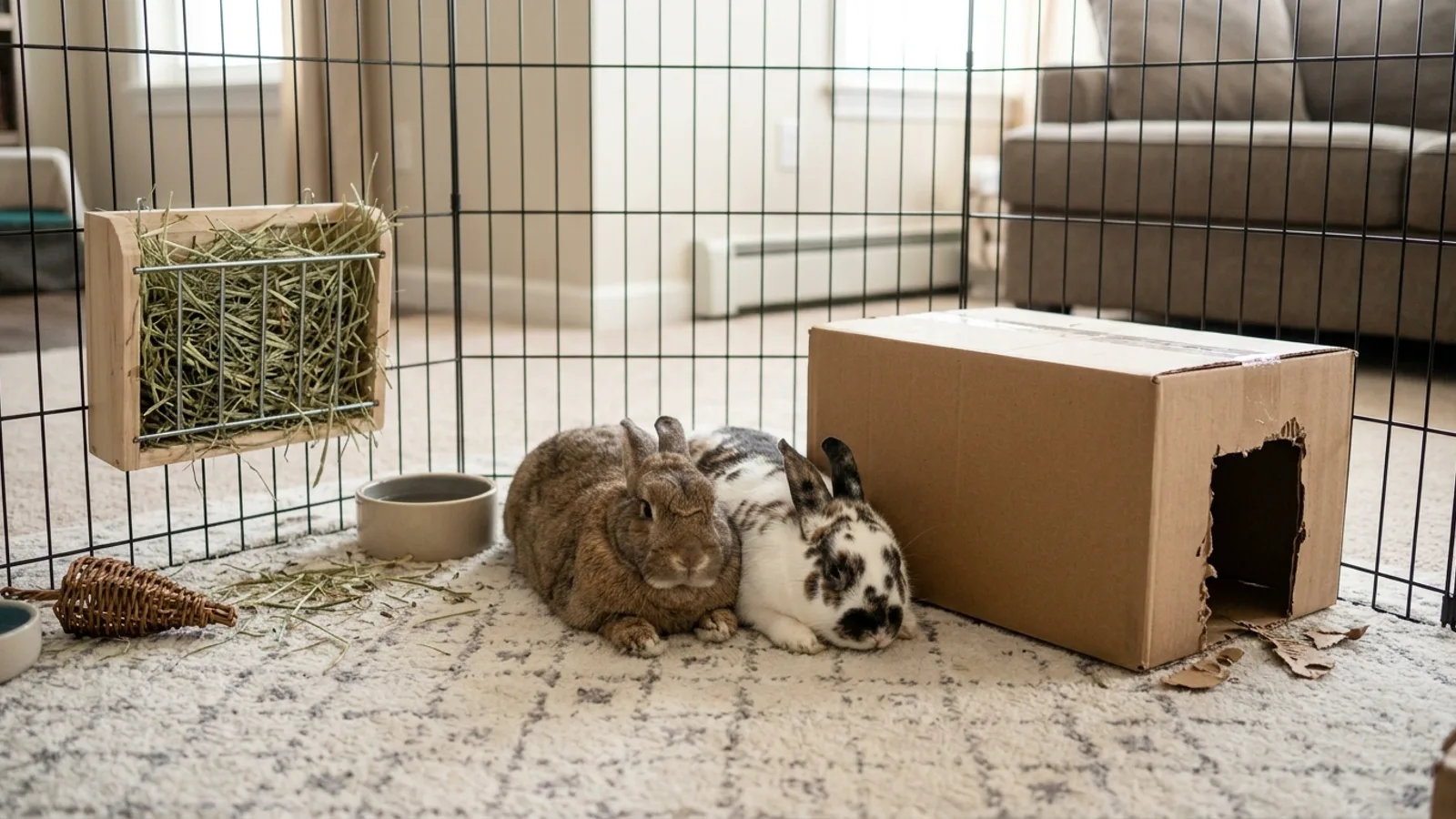
- Space to run. Binkies need room. A pen joined to the cage helps; see our guides to the rabbit pen and indoor rabbit cage.
- Company. The RSPCA (UK) says rabbits are highly social and should not be housed alone unless a vet advises otherwise.
- Hides with two exits. The Rabbit Welfare Association suggests cardboard boxes with a hole at each end, so a startled rabbit has somewhere to feel secure.
- Time at the right hour. The RSPCA (UK) says rabbits are most active in the early morning, late afternoon and overnight, so that's when to sit on the floor and let them come to you.
- Things to dig and chew. A dig box and plenty of hay give natural behaviors an outlet. Our guide to safe foods for rabbits covers the hay side.
Frequently asked questions
Why does my bunny thump at night?
Thumping is an alarm signal, and the RSPCA (UK) notes rabbits are active overnight, so they notice night-time noises, other pets or wildlife outside. Check for a cause, and talk to your vet if it happens alongside other changes.
Why does my bunny run circles around my feet?
Rabbit.org says circling is an invitation to play or a courtship behavior. If it comes with constant mounting or spraying, ask your vet about neutering.
Is it normal for a rabbit to flop over suddenly?
Yes. A sudden flop onto the side, followed by lying still and relaxed, means your rabbit feels completely safe. If your rabbit falls over and cannot get up or seems wobbly, that is different: call your vet.
Why does my bunny nudge me?
Usually to ask for attention or to move you out of the way, according to Rabbit.org.
The takeaway
Most bunny behavior falls into three groups: happy (binkies, flops, soft tooth grinding), talking (chinning, nudging, circling) and warning (thumping, flat ears, boxing). Learn your rabbit's normal, and treat any sudden change, loud tooth grinding or hunched posture as a reason to call the vet. Your next step: spend 15 minutes on the floor near your rabbit this evening and match what you see to the chart above.