Can Rabbits Eat Grapes? Safe Amounts, Risks and Treat Tips
Can rabbits eat grapes? Yes. Grapes are safe for rabbits, but only as a small, occasional treat. They are sweet and watery, so one grape (or half of one for a small rabbit) once or twice a week is plenty.
The problem with grapes is not poison but sugar. A rabbit's gut is built for hay and grass, and too much fruit can upset it. Below you will find exactly how much is safe for your rabbit's size, how to serve grapes, what to know about raisins and grape leaves, and the warning signs that mean it is time to call your vet.
Every rabbit is different, so treat this as general guidance and check with your vet if your rabbit is young, overweight or has a sensitive tummy.
| Quick verdict | Grapes for rabbits |
|---|---|
| Safe | Fresh, washed grapes, seedless or with seeds removed, as a rare treat for healthy adult rabbits |
| Sometimes | A single raisin without added sugar, very occasionally |
| Skip | Grapes for baby rabbits, overweight rabbits, grape leaves and vines, and anything with added sugar |
Are grapes safe for rabbits?
Yes. The House Rabbit Society includes grapes in its list of fruits rabbits can eat, and the PDSA, a UK veterinary charity, lists grapes among fruits that are "safe for your rabbits in small amounts". So if you are asking "can bunnies eat grapes?" the answer from rabbit welfare organisations is a clear yes, with a strong emphasis on small.
The reason for the caution is sugar. PDSA notes that fruit is high in sugar and should not be part of a rabbit's daily diet. A healthy rabbit diet is mostly hay, with leafy greens and a small amount of pellets. Fruit sits on top of that as an extra, not as a food group. Our guide to safe foods for rabbits shows how the whole bowl should be balanced.
How many grapes can a rabbit eat?
Two guidelines help here. The House Rabbit Society suggests fresh fruit should be no more than about 1 teaspoon per 2 lb of body weight per day. The Rabbit Welfare Association & Fund goes further and suggests fruit should be an occasional treat "no more than once or twice a week", giving "a grape or a slice of apple" as an example of a treat.
Putting the two together, here is a practical rule of thumb. The teaspoon figures come from the House Rabbit Society; the grape amounts are our own conservative translation of them for a once- or twice-a-week treat.
| Rabbit weight | Max fruit per day (HRS) | Suggested grape treat |
|---|---|---|
| Small, about 2–4 lb | 1–2 teaspoons | Half a grape |
| Medium, about 5–7 lb | 2½–3½ teaspoons | One grape |
| Large, about 8–12 lb | 4–6 teaspoons | One to two grapes |
On a day you give a grape, make it the only fruit: skip the apple slice or banana. PDSA also suggests reducing the next meal slightly when you give a treat, so the extra calories do not add up.
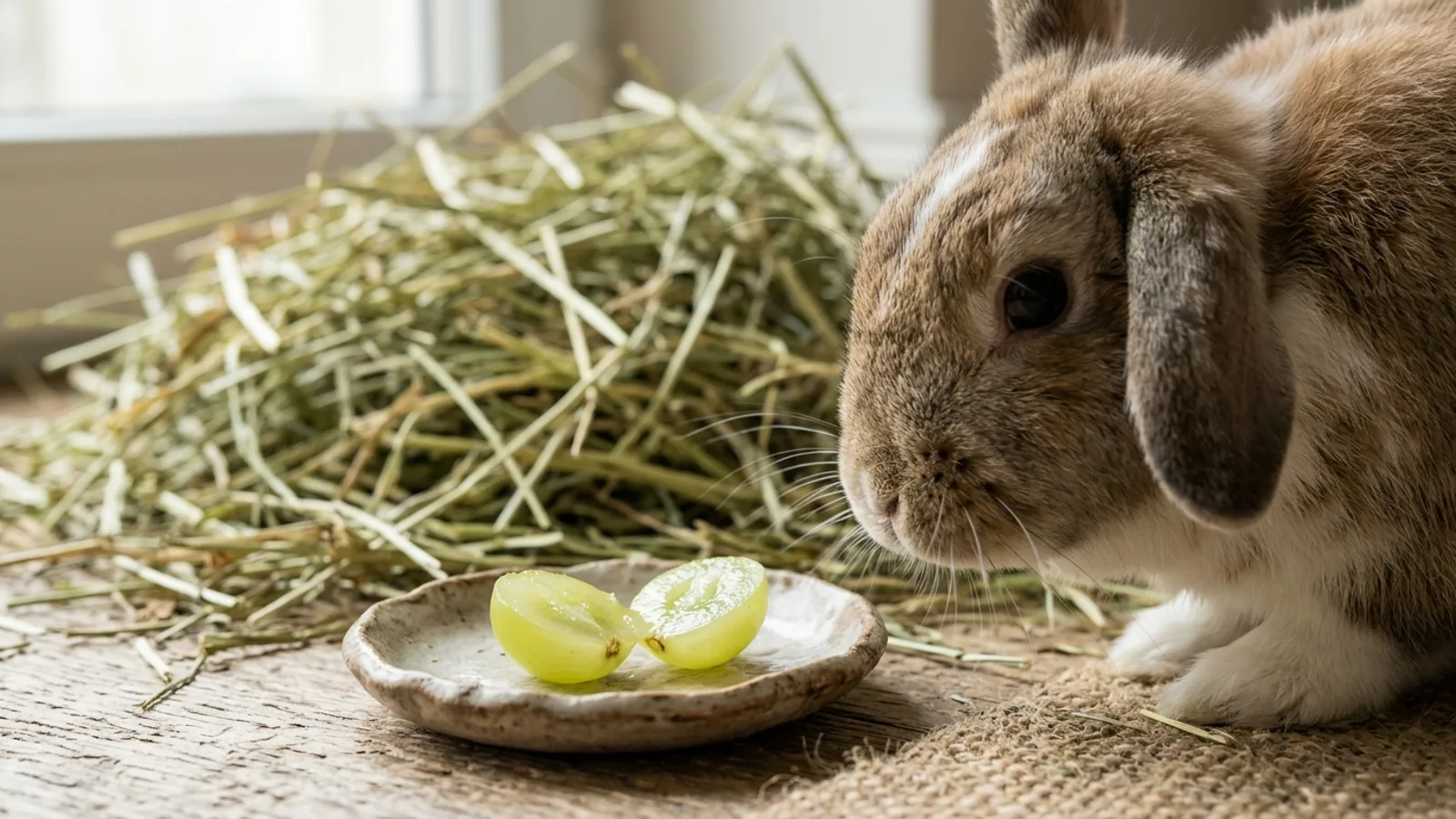
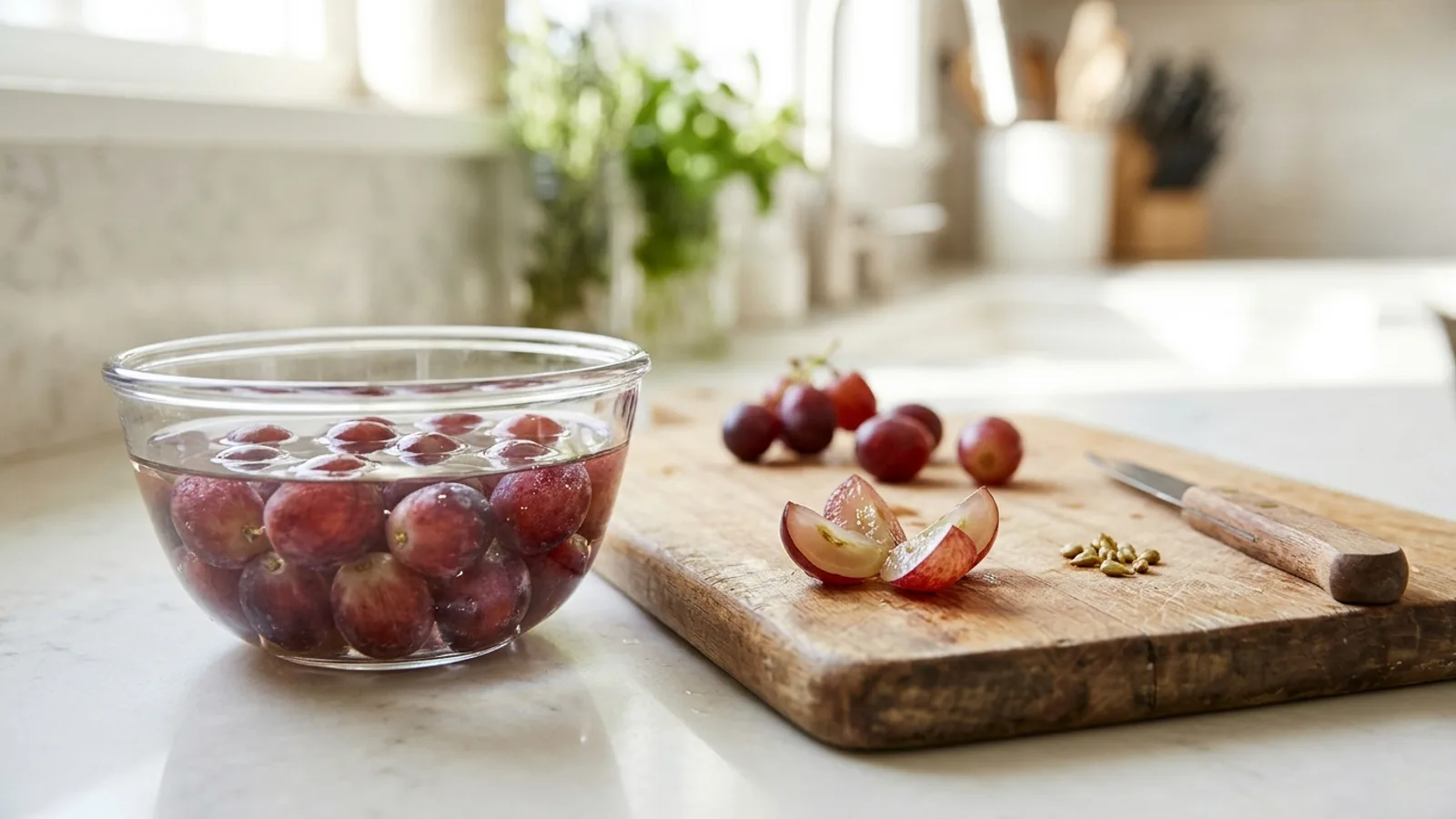
How to serve grapes to your rabbit
- Wash it well. The House Rabbit Society recommends washing all produce for at least two minutes in a bowl, changing the water several times, as a precaution against the RHDV2 virus.
- Remove the seeds. Choose seedless grapes or cut the grape open and take the seeds out. The ASPCA advises removing all pits and seeds from fruit before offering it.
- Cut it up. Halve or quarter the grape into bite-size pieces, again following the ASPCA's advice. This also makes one grape last longer as a training reward.
- Leave the skin on. The House Rabbit Society says it is more nutritious to leave the skin on fruit and simply wash it thoroughly.
- Serve it by hand or in the food bowl, and take away anything left uneaten so it does not spoil.
Red, green or black grapes?
None of the welfare and veterinary sources we checked make a difference between grape colours. Red, green and black table grapes can all be treated the same way: a small, washed, seed-free treat.
Can rabbits eat raisins?
Raisins are dried grapes, which means the water has gone and the sugar is packed into a much smaller piece. That makes them easy to overfeed. The ASPCA says dried fruit can work as a rabbit treat but tells owners to check the label for added sugar and to keep looking if there is any.
Our advice: fresh grapes are the better choice. If you do use raisins, give a single plain raisin with no added sugar, not a handful, and count it as that day's fruit.
Can rabbits eat grape leaves or vines?
We could not find a veterinary or rabbit welfare source that confirms grape leaves or vines are safe for rabbits, and they are not on the PDSA's or the Rabbit Welfare Association's lists of recommended plants and greens. Until your vet tells you otherwise, the safe choice is to keep your rabbit away from grape vines and to forage from plants those lists do include.
If you grow grapes, remember that garden plants may also have been sprayed. PDSA warns never to feed anything you cannot identify or anything that may have been exposed to pesticides or fertilisers.
Can baby rabbits eat grapes?
No. Young rabbits have sensitive digestive systems. In the House Rabbit Society's feeding plan, rabbits only start on new greens at around 12 weeks old, and treats are not part of the plan until the "young adult" stage from about 7 months. Until then, keep fruit out of the bowl and ask your vet before adding anything new.
The same goes for overweight rabbits: PDSA says sweet treats should be avoided in rabbits that are overweight.
My rabbit ate too many grapes: what now?
If your rabbit helped itself to a bunch of grapes, do not panic, but do watch closely for the next 24 hours. The main risk from a sugar overload is a gut upset. The RSPCA lists these signs of gut stasis, a serious slowdown of the digestive system:
- Loss of appetite
- Smaller, fewer or no droppings
- A bloated stomach that feels hard
- Excessive gas
- Sitting hunched or not moving
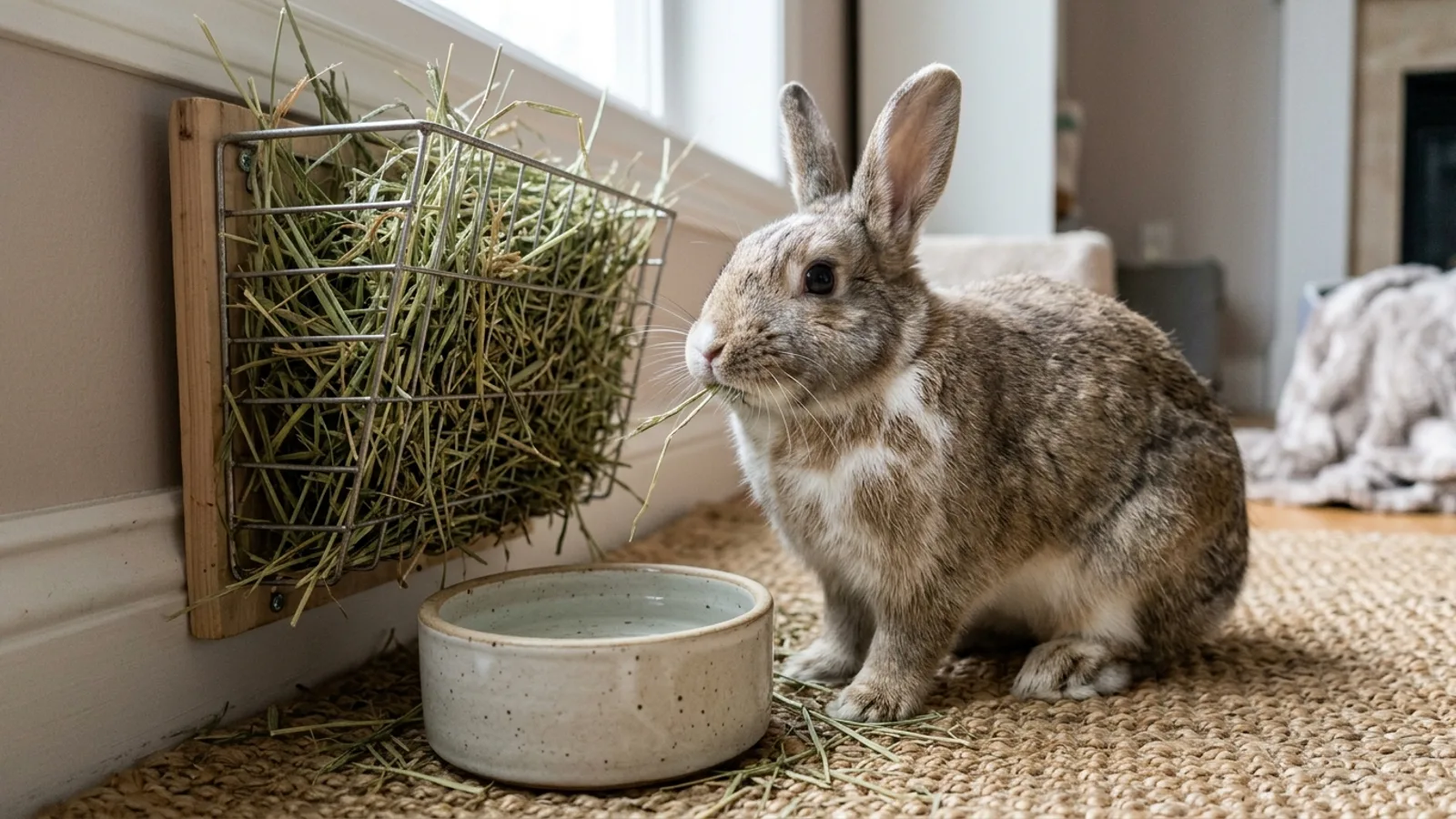
The RSPCA says to take your rabbit to a vet immediately if you suspect gut stasis, because it can become life-threatening quickly if untreated but can be treated if spotted early. It also advises seeing a vet if droppings do not return to normal within 24 hours. In the meantime, make sure plenty of fresh hay and water are available and do not offer any more fruit.
Grapes compared with other fruit treats
If your rabbit loves sweet treats, rotating different fruits keeps things interesting. Here is how grapes compare with other popular choices, based on the preparation advice from the House Rabbit Society and PDSA:
| Fruit | Prep before serving | Good to know |
|---|---|---|
| Grapes | Wash, remove seeds, cut up | Easy to portion: half or one grape |
| Apple | Remove stem and seeds | PDSA warns apple pips are poisonous |
| Banana | Remove peel | Very sweet; keep portions tiny |
| Berries | Wash | One berry is a good-size treat |
| Pear | Remove seeds | PDSA suggests about 1/8 of a pear as a portion |
Whichever you choose, give only one fruit on a treat day and keep the total within the amounts above.
Frequently asked questions
Are grapes toxic to rabbits?
No. Rabbit welfare organisations such as the House Rabbit Society and PDSA list grapes as a safe fruit for rabbits in small amounts. The concern is their sugar content, not a toxin.
How often can rabbits eat grapes?
The Rabbit Welfare Association suggests fruit treats no more than once or twice a week. On those days, half a grape for a small rabbit or one grape for a medium rabbit is plenty.
Can rabbits eat grape skins?
Yes. The House Rabbit Society says it is more nutritious to leave the skin on fruit, as long as it has been washed thoroughly.
Can I use grapes as a training treat?
Yes, and it is a good use for them. Cut one grape into small pieces and use those as rewards during a session, so the total stays within a single treat portion.
The takeaway
Can rabbits eat grapes? Yes, as a small, occasional treat: half to one grape, once or twice a week, washed, seed-free and cut up. Skip them for baby and overweight rabbits, choose fresh grapes over raisins, and keep your rabbit away from grape vines. Your next step: next time you give a treat, cut a single grape into pieces and use it as a reward, and keep hay as the main meal.
This article is for general information and is not a substitute for advice from a veterinarian.