Can Rabbits Eat Tomatoes? Safe Parts, Toxic Parts and Portions
Can rabbits eat tomatoes? Yes, but only the ripe red fruit, and only as a small treat. The rest of the tomato plant is a different story: the leaves, stems, vines and green, unripe tomatoes contain natural toxins and should never be given to a rabbit.
That split matters most for owners who grow vegetables or let their rabbit roam the garden. Below you will find which parts are safe, how much ripe tomato to give, what about cherry tomatoes and tomato sauce, what to do if your rabbit chewed the plant, and a checklist of common vegetable-garden plants to keep out of reach.
Every rabbit is different, so treat this as general guidance and talk to your vet before adding new foods, especially for young or sensitive rabbits.
| Quick verdict | Tomatoes for rabbits |
|---|---|
| Safe | A small piece of ripe, red, washed tomato flesh, as an occasional treat for healthy adult rabbits |
| Sometimes | Half a ripe cherry tomato instead of a slice, counted as that day's fruit |
| Never | Tomato leaves, stems, vines and flowers; green or unripe tomatoes; tomato sauce, ketchup or cooked tomato dishes |
Are tomatoes safe for rabbits?
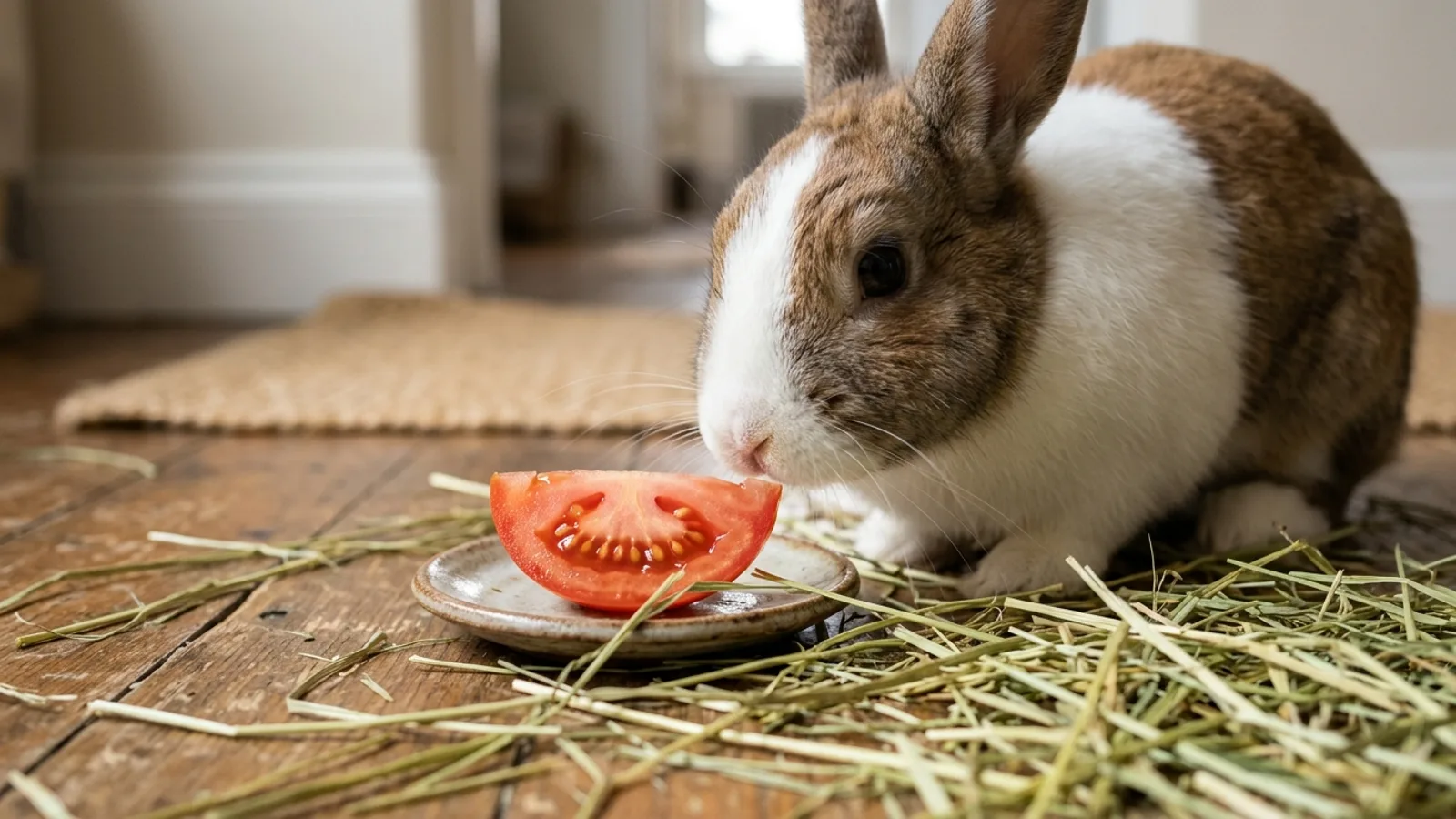
The ripe fruit is. Rabbit.org, the House Rabbit Society's care site, lists tomato with the note "ripe fruit only, unripe and greens are toxic". The Rabbit Welfare Association & Fund puts it the same way: all parts of the tomato plant other than the fruit are harmful to rabbits.
So when people ask "can bunnies eat tomatoes?", the honest answer is "the red bit, a little, sometimes". Rabbit.org notes that tomatoes are high in water content, and as a fruit they belong in the treat category. Rabbit.org suggests fruit make up less than 5% of a rabbit's daily diet, with hay and leafy greens doing the heavy lifting. Our guide to safe foods for rabbits shows how that balance looks in a real bowl.
Are tomato plants poisonous to rabbits? Which parts to avoid
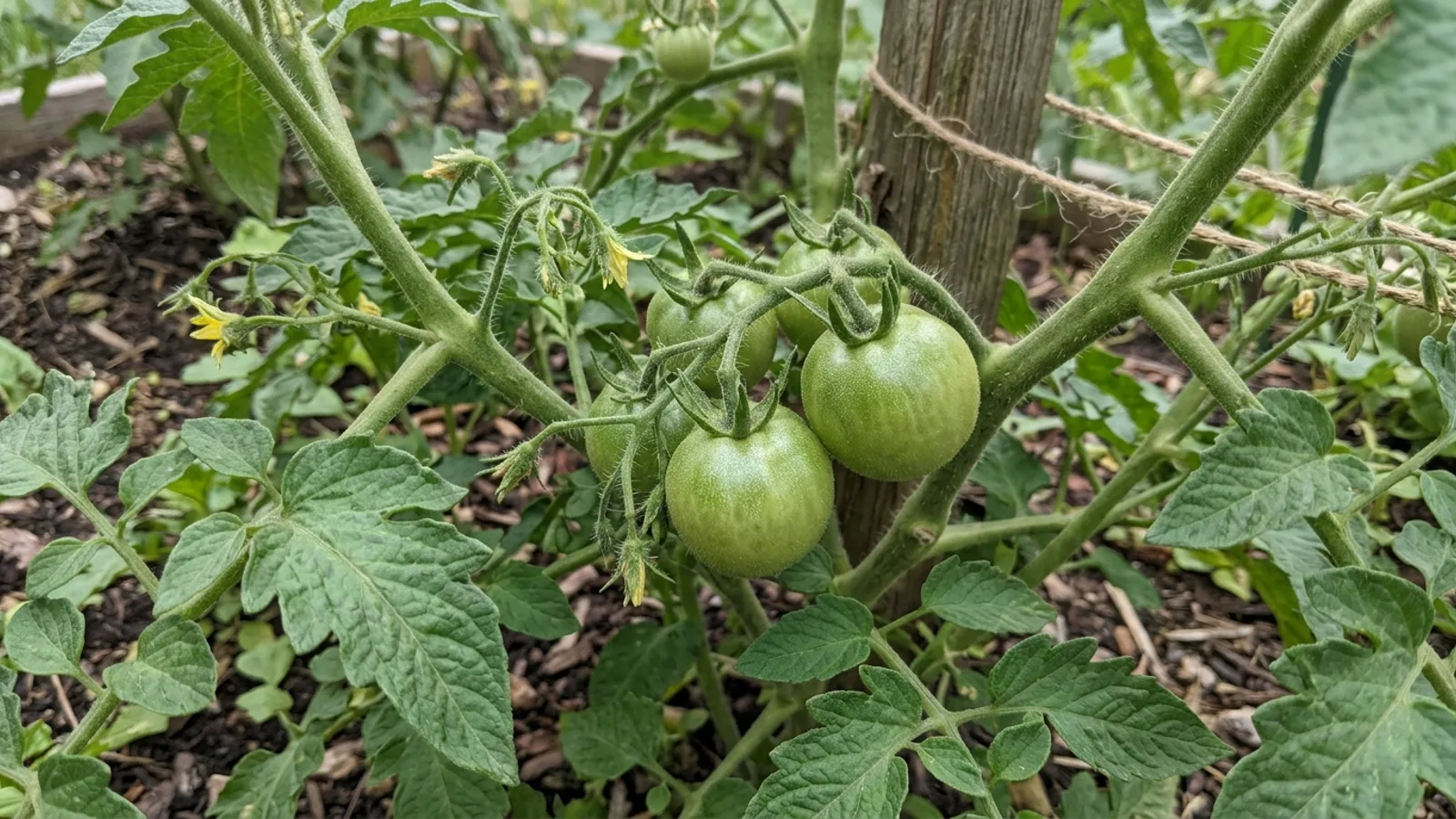
Tomatoes belong to the nightshade family, and like their relatives they make natural defence chemicals. NC State University's plant database lists the toxic principles in tomato plants as the alkaloids tomatine and solanine, with the leaves and stems as the poisonous parts. Cornell University's poisonous plants resource adds that these compounds are most concentrated in tomato vines and green tomatoes, because their production follows the same conditions that create chlorophyll.
| Part | Safe for rabbits? |
|---|---|
| Ripe red fruit (flesh and skin) | Yes, as a small treat |
| Green or unripe tomatoes | No, toxic |
| Leaves | No, toxic |
| Stems and vines | No, toxic |
| The green top (calyx) on the fruit | No, remove it |
The RSPCA lists "tomato leaves and stems" among the foods to avoid for rabbits, and the Rabbit Welfare Association includes the tomato plant on its list of known poisonous plants. So yes, tomato plants are poisonous to rabbits, even though the ripe fruit is not.
How much tomato can a rabbit eat?
Treat ripe tomato like any other fruit. The House Rabbit Society suggests fresh fruit be no more than about 1 teaspoon per 2 lb of body weight per day, and the Rabbit Welfare Association recommends fruit treats no more than once or twice a week.
In practice, that means a piece about the size of your thumbnail for a small rabbit, or a thin wedge for a medium to large rabbit, once or twice a week, on a day when they get no other fruit. These amounts are our own conservative reading of the guidelines above, not an official portion.
How to serve it
- Choose a fully ripe, red tomato. Skip any with green patches.
- Wash it well. The House Rabbit Society recommends washing produce for at least two minutes in a bowl, changing the water several times, as a precaution against the RHDV2 virus.
- Remove the green top and any stem.
- Cut a small piece and offer it by hand or with their greens.
- Introduce it slowly. Rabbit.org advises one new food at a time, waiting 24 hours before adding another, and stopping any food that causes soft droppings.
Can rabbits eat cherry tomatoes?
Yes, the same rules apply: ripe and red only, with the green stalk and top removed. Because cherry tomatoes are small, it is easy to forget how quickly they add up. Half a cherry tomato is a sensible treat portion for most adult rabbits, and it should count as that day's fruit.
Avoid cherry tomatoes still on the vine, or picked green from the plant, for the reasons above.
What about tomato sauce, ketchup and cooked tomatoes?
Skip them all. Sauces, ketchup, salsa and cooked dishes are made for people and often include onion and garlic, which the RSPCA lists among the foods rabbits should not eat, along with added salt and sugar. A rabbit's diet should be raw, fresh plants, so if a tomato has been cooked or processed, it is not a rabbit food.
Can rabbits eat tomato leaves? What to do if your rabbit chewed the plant
No, rabbits should not eat tomato leaves. If your rabbit has nibbled tomato leaves, stems or green tomatoes:
- Move your rabbit away from the plant and remove any pieces from its mouth or enclosure.
- Work out roughly what and how much was eaten, and take a photo of the plant.
- Call your vet for advice, even if your rabbit seems fine. The Rabbit Welfare Association notes that many poisonous plants have an effect that builds up in the organs over time, so a rabbit may not look ill straight away.
- Watch for warning signs. The House Rabbit Society says toxic plants most often cause nausea but may result in death. The RSPCA's signs of serious gut trouble include loss of appetite, smaller or fewer droppings, a hard bloated stomach, and sitting hunched or not moving.
Cornell notes that it takes a relatively large amount of these compounds to cause death, so a single nibble is less likely to be serious than a rabbit grazing a plant for a while. But rabbits are small and hide illness well, so let your vet make that call.
Garden safety: vegetable plants to fence off from rabbits
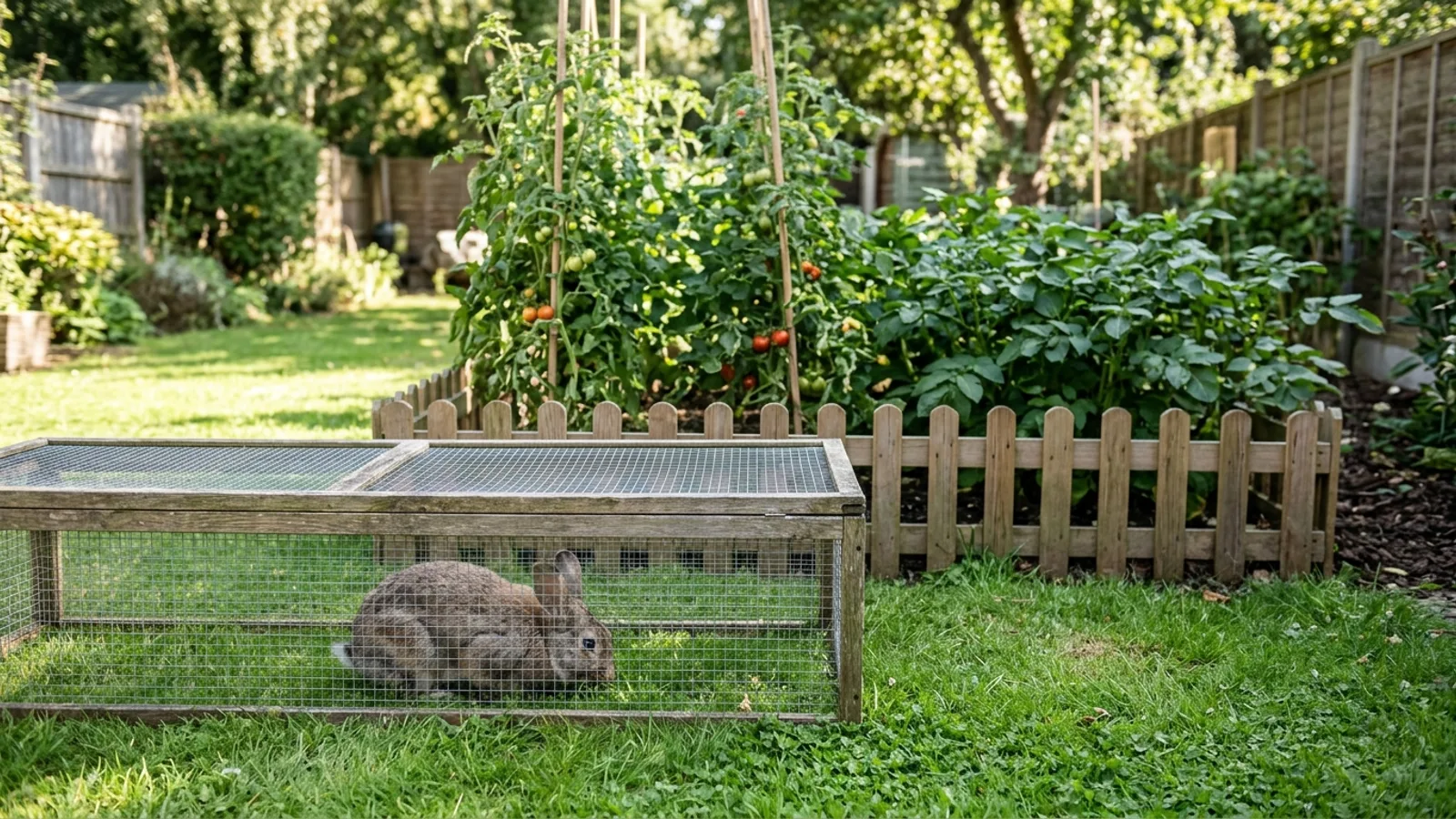
If your rabbit free-roams the garden, the vegetable patch is where most accidental poisonings start. This checklist comes from the Rabbit Welfare Association's guidance on growing vegetables and its list of poisonous plants:
| Plant | What to keep away from your rabbit |
|---|---|
| Tomato | Every part except the ripe fruit |
| Potato | All parts of the plant |
| Bell pepper | The plant; only the pepper itself is safe |
| Aubergine (eggplant) | The plant |
| Beans: broad, runner, haricot, flageolet | The beans, which contain toxins when raw |
| Onions, garlic, leeks, spring onions | The whole plant |
| Rhubarb | The leaves |
| Courgettes and marrows | Can turn bitter and toxic in drought years; best not grown where rabbits can reach |
The Rabbit Welfare Association suggests raised beds to discourage nibbling, and recommends aviary-style panels rather than netting for fruit cages, because rabbits can get tangled in netting. A simple rule: if your rabbit can reach it, assume it will taste it.
For safer treats from the garden or fridge, see our guides to celery for rabbits and grapes for rabbits.
Frequently asked questions
Are tomatoes bad for rabbits?
Ripe tomato flesh is not bad in small amounts, but it is a treat, not a staple. The green parts of the plant and unripe tomatoes are the problem, because they contain tomatine and solanine.
Can baby rabbits eat tomatoes?
No. Rabbit.org says vegetables should only be introduced to baby rabbits after 12 weeks of age, one at a time and in small amounts. Treats such as tomato can wait until your rabbit is an adult, and it is worth asking your vet first.
Can rabbits eat tomato seeds?
The seeds come with the ripe fruit, and the sources we checked do not single them out as a problem. Keeping the portion small is what matters.
My rabbit ate a green tomato. Is that an emergency?
Call your vet for advice. Green tomatoes have the highest levels of the plant's toxins, and the vet can tell you whether to watch at home or come in, based on your rabbit's size and how much it ate.
The takeaway
Can rabbits eat tomatoes? Only the ripe red fruit, in a small piece, once or twice a week. Never the leaves, stems, vines or green tomatoes, and never sauces or cooked tomato. If you grow tomatoes, fence them off along with potatoes, peppers and the rest of the nightshade family. Your next step: walk your garden or balcony today with the checklist above and move or fence anything your rabbit can reach.
This article is for general information and is not a substitute for advice from a veterinarian. If you think your rabbit has eaten something toxic, contact your vet straight away.