How to Litter Train a Rabbit: A 7-Step Plan That Works
Here is how to litter train a rabbit: put a large, low-sided box with a thin layer of paper-based litter in the corner they already use, pile fresh hay at one end, start in a small space, and give them more room only once they use the box reliably. Rabbits naturally choose one or two toilet spots, so you're working with their instincts, not against them.
Rabbit.org (House Rabbit Society) notes that rabbits instinctively pick specific spots, usually a corner, for urine and most of their droppings. This guide walks through the setup, a 7-step plan, and what to do when your rabbit keeps missing the box.
What you need before you start
- A big enough box. Rabbit.org says a litter box for rabbits should be large enough to turn around and stretch out in, with one low side to hop in. Plastic is ideal because it's easy to disinfect and doesn't hold odor. Avoid wire or metal bottoms, which can hurt feet. The PDSA suggests a low front with a back about 10–20cm high.
- Rabbit-safe litter. Paper-based pellets, compressed paper or wood-pulp pellets, or a natural grass-based litter. Rabbit.org says a thin layer is enough to absorb moisture.
- Fresh hay. Rabbits like to eat and toilet at the same time, so hay in or next to the box is the strongest pull you have.
- A pen or barriers to keep the space small at first.
- A safe cleaner: white vinegar and water or an enzymatic pet cleaner (see cleaning below).
Never use clay or clumping cat litter. Both Rabbit.org and the PDSA warn it can block a rabbit's gut if eaten. Our guide to the best bedding for rabbits compares every common material.
How to litter train a rabbit in 7 steps
- Book the spay or neuter. Rabbit.org says hormones kick in at puberty, around 3–6 months, and unneutered rabbits often spray urine and scatter droppings to mark territory. The PDSA says neutered rabbits are usually easier to teach because they're less likely to urine mark. Your vet will advise on timing.
- Start small. Keep your rabbit in their pen or a sectioned-off part of a room. The PDSA says limiting the area with barriers makes training easier.
- Watch where they go. Spend a day noticing which corner your rabbit picks, then put the box there. It's much easier to move the box to the rabbit's choice than the other way round.
- Make it smell like a toilet. The PDSA recommends adding a few of your rabbit's droppings and a little urine-soaked bedding to the tray so they recognise its purpose.
- Add hay. Rabbit.org suggests a hay rack or pile of fresh hay at one end of the box or just outside it. Top it up every day.
- Reward, never punish. Offer a small treat or praise when your rabbit uses the box. Best Friends Animal Society says punishment doesn't work and only stresses the rabbit; just pick up stray droppings and pop them in the box.
- Expand slowly. Once your rabbit uses the box consistently, Best Friends advises adding space a little at a time. Put an extra box wherever they start choosing a new corner, and remove extras once one is used reliably.
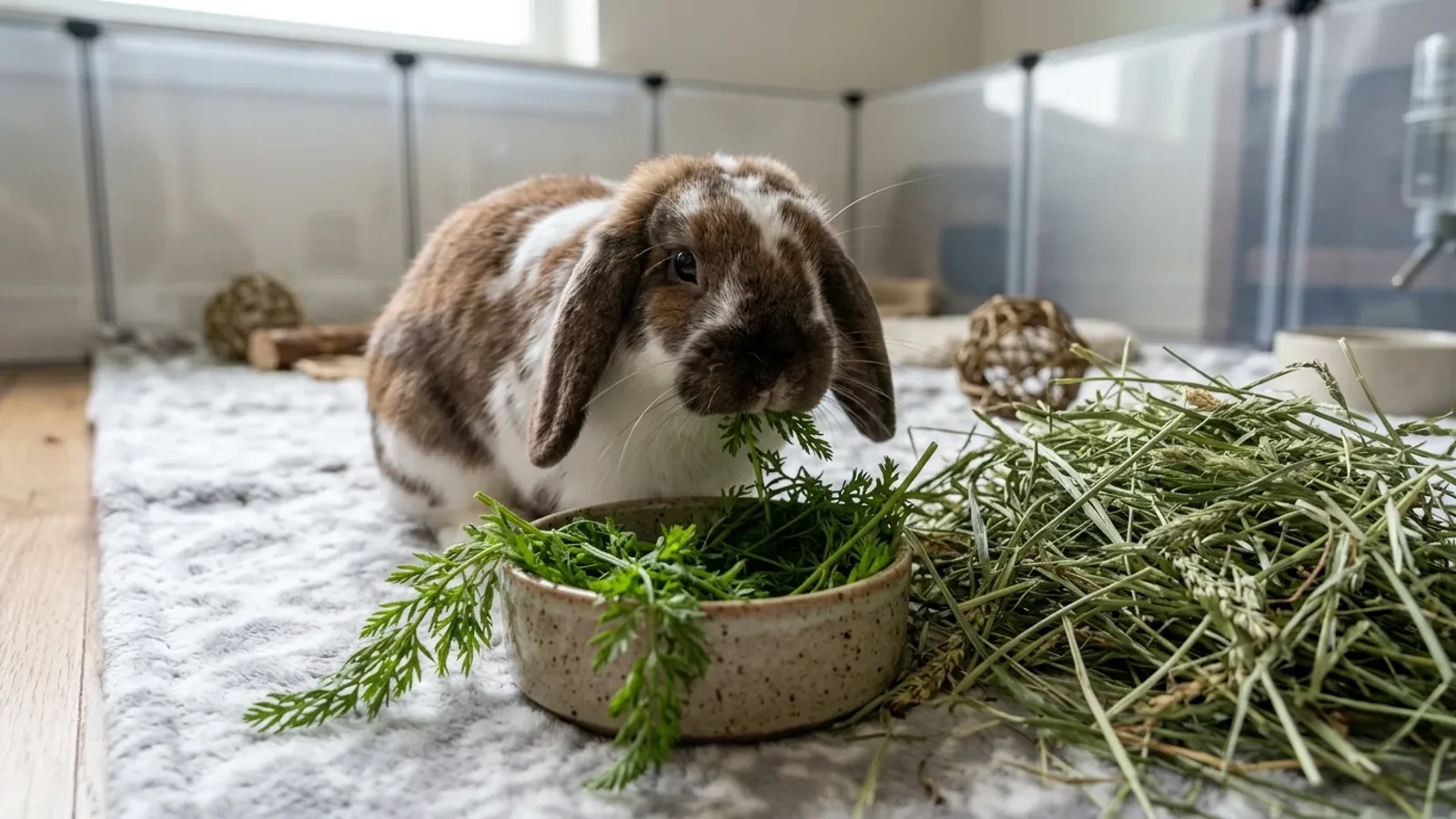
Rabbit litter training timeline: what to expect
There's no fixed schedule. The PDSA simply advises patience, and Best Friends warns not to expect quick results. A few things change the pace:
| Factor | Effect on training | Source |
|---|---|---|
| Spayed or neutered | Usually faster and more reliable | PDSA, Rabbit.org |
| Adult rabbit | Often easier: they toilet in predictable places | PDSA, Rabbit.org |
| Young baby rabbit | Harder; shorter attention span | Best Friends |
| Too much space too soon | More accidents and marking | Best Friends, Rabbit.org |
| Recent move, new pet or rearranged room | Temporary setbacks | Rabbit.org, PDSA |
So yes, an older rabbit can learn. Rabbit.org says older rabbits are actually easier to train than babies.
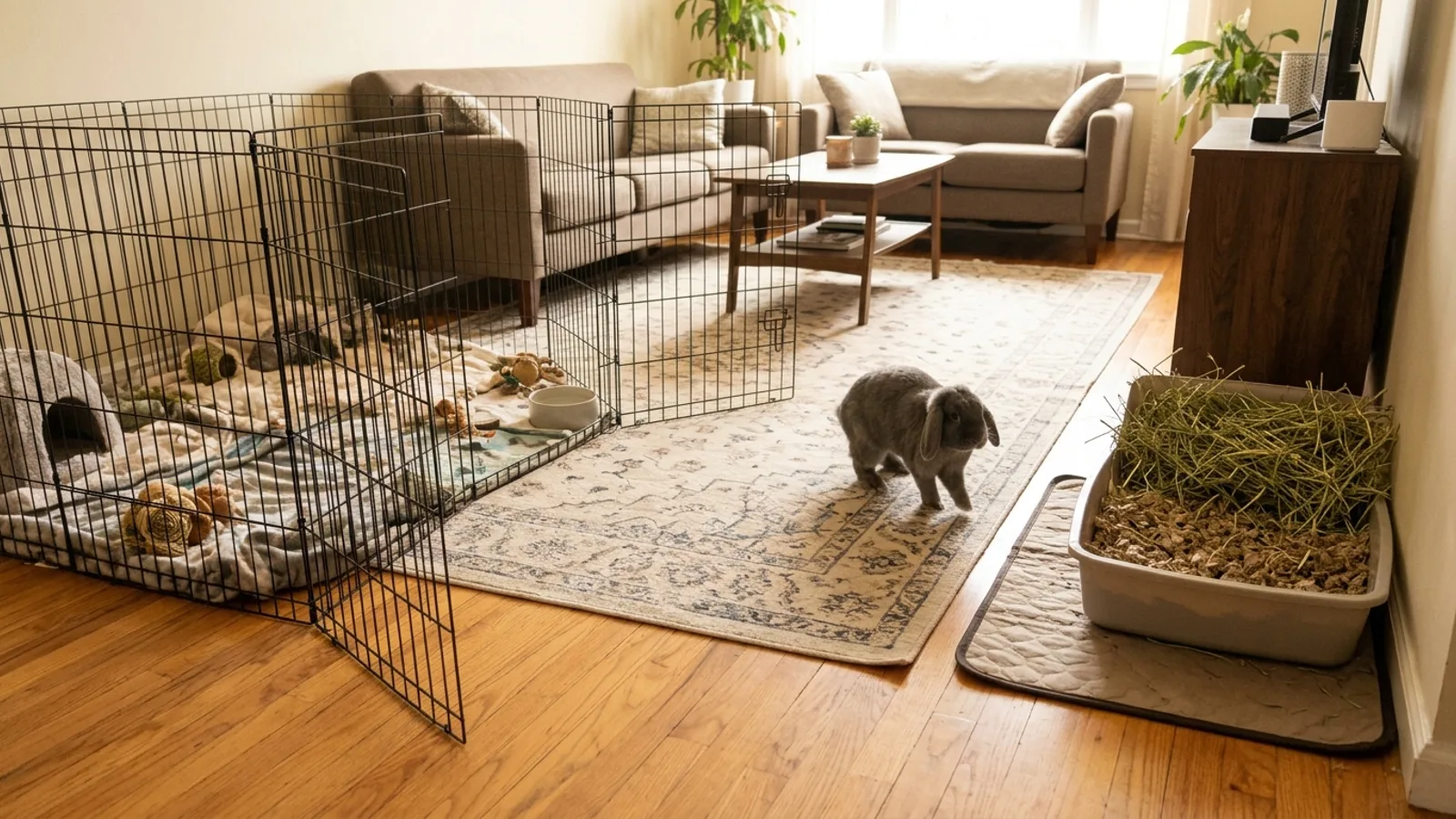
Setting up a rabbit litter box in a free-roam home
Rabbit.org says one box in the enclosure is usually enough for a one-story home of three or four rooms, with extra boxes on other floors. Your rabbit will show you if one isn't enough.
- One box per rabbit, or one big shared box. The PDSA says a bonded pair can share if the tray fits both at once.
- Keep the toilet away from the bed. The RSPCA says rabbits need constant access to a toilet area separate from where they sleep.
- Don't share with the cat. Rabbit.org warns of parasites passing between species, on top of the clumping-litter risk.
Planning a bigger space? Our rabbit pen guide covers sizes and indoor layouts.
How to clean the box and accidents
- Daily: remove wet litter and top up hay. The RSPCA says toilet areas should be cleaned every day.
- Every few days: Best Friends suggests a full box clean every two to three days, or as needed, with half white vinegar and half water.
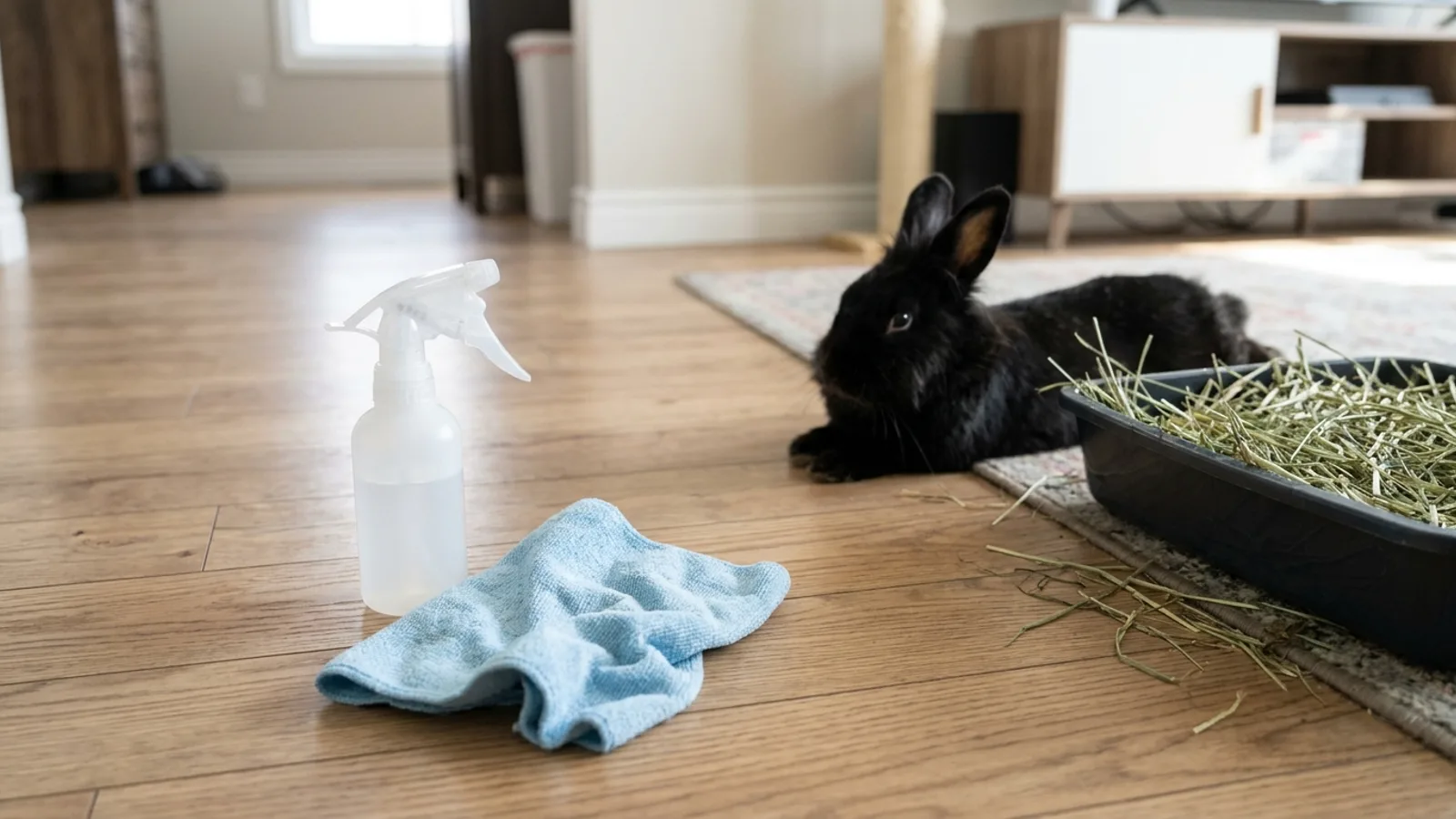
- Accidents: Rabbit.org says soap and water alone won't remove the urine traces that draw a rabbit back, so use vinegar and water or an enzymatic cleaner. The PDSA suggests an unscented pet urine cleaner.
- Coax them out first. Best Friends advises against reaching in and pulling your rabbit out of the box to clean it.
The RSPCA also suggests putting back a small amount of used bedding after cleaning, so the area still smells familiar.
Common mistakes and how to fix them
| Problem | Likely cause | Fix |
|---|---|---|
| Pees in a different corner | Box in the wrong place | Move the box to that corner, or add a second one |
| Scattered droppings | Territory marking | Neuter; a few strays are normal |
| Pees on the sofa or bed | A favorite spot that has become a habit | Block access or cover it; redirect to the box (Rabbit.org) |
| Sits in the box but goes over the edge | Box too small or sides too low | Bigger box with a higher back |
| Was trained, suddenly isn't | Stress or illness | Check for changes; see a vet |
A sudden change deserves attention. The PDSA lists urine infections and arthritis among possible causes, and Rabbit.org says small dribbling spots can point to a bladder problem. Ask a rabbit-savvy vet. If your rabbit is marking more as they mature, our guide to bunny behavior explains what else hormones can change.
Frequently asked questions
Can you litter train an older rabbit?
Yes. Both the PDSA and Rabbit.org say adult rabbits are often easier to train than young ones, because they toilet in predictable places.
Why does my rabbit poop outside the litter box?
A few stray droppings are normal territory marking, which Best Friends calls "hop and drop." Lots of them usually mean an unneutered rabbit, too much space too soon, or a box in the wrong spot.
Can rabbits use cat litter?
Not clay or clumping types: they can block the gut if eaten. The RSPCA lists paper-based, non-clumping, non-expanding cat litter as suitable.
How long does it take to litter train a rabbit?
It varies. Neutered adult rabbits tend to pick it up fastest; babies and unneutered rabbits take longer. Expand their space only once the box is used every time.
The takeaway
Litter training a rabbit comes down to their corner, the right box, a thin layer of safe litter, plenty of hay, and a small space you open up slowly. Neutering does much of the work, and patience does the rest. Your next step: today, note which corner your rabbit uses most and put a hay-topped box right there.