Normal Rabbit Poop: What Healthy Droppings Look Like
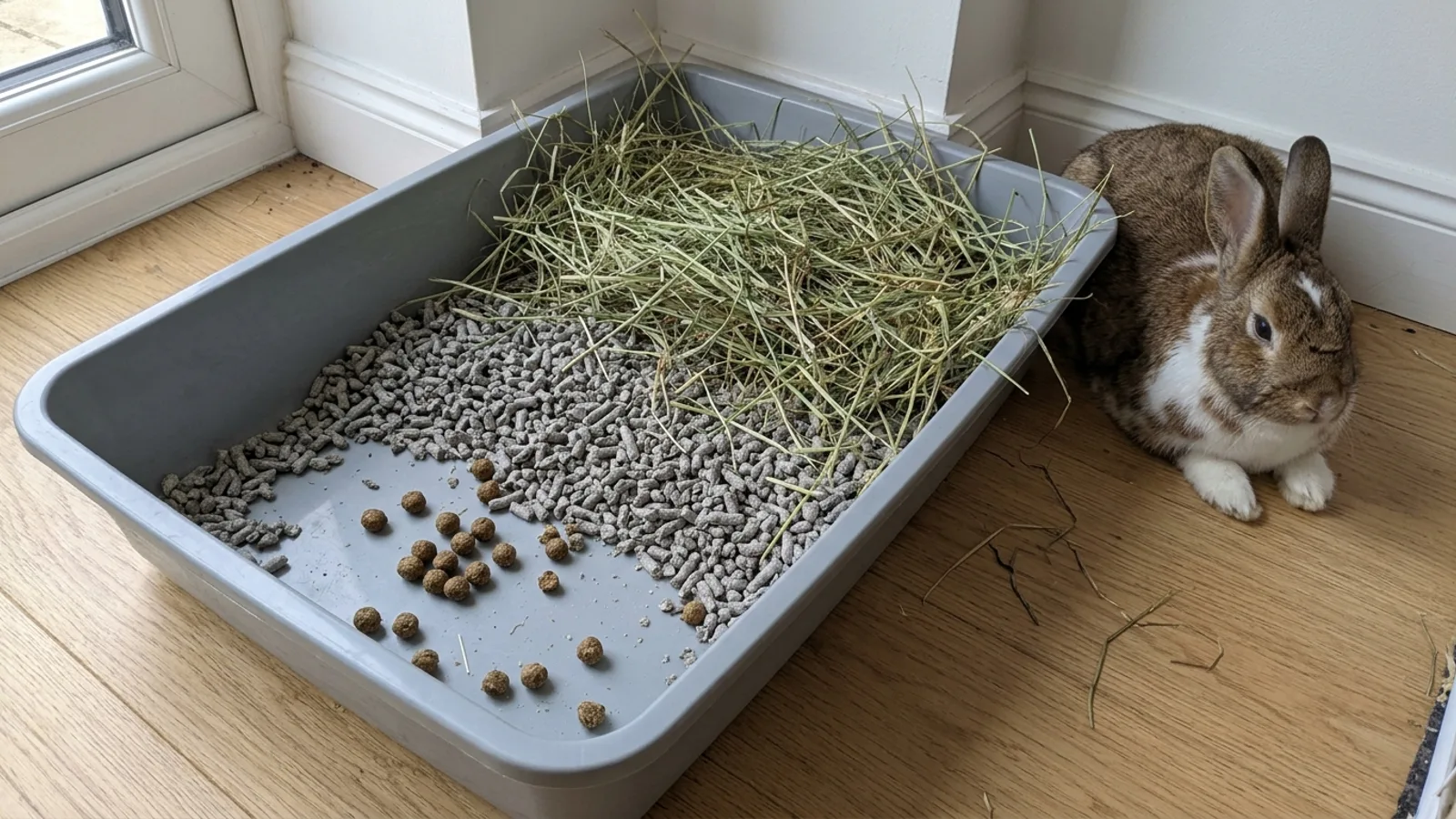
Normal rabbit poop is round, dry and firm, roughly the same size every time, and there is plenty of it. The RSPCA describes healthy droppings as "round, hard and dry" and "consistent in size and appearance." Rabbits also make a second, softer kind that they eat, which is just as normal.
Because rabbits hide illness so well, the litter tray is one of the best early-warning systems you have. A change in rabbit poop can show up before your rabbit looks unwell at all.
Below: the two kinds of droppings, a quick chart of what changes mean, and when a change needs a vet the same day.
What normal rabbit poop looks like
The droppings you see in the litter tray are fecal pellets. Healthy ones are:
- Round, not flattened, stringy or misshapen.
- Dry and firm. They shouldn't be soft, sticky or wet.
- Even in size, with no mix of large and tiny pellets.
- Plentiful, and passed through the day. The RSPCA suggests checking every day that your rabbit is "passing plenty of dry droppings."
Colour varies from rabbit to rabbit and with what they eat, so learn what's normal for yours. The RSPCA lists a change in colour, along with dark, sticky droppings, as a possible sign of illness.
What goes in comes out: a rabbit that eats less soon passes less rabbit poop, which is why the RSPCA puts droppings next to appetite on its list of daily checks.
Cecotropes: the poop rabbits eat
Rabbits make a second type of dropping called cecotropes (also spelled caecotrophs). Dr Brendan Noonan of MSPCA-Angell describes them as soft pellets that "stick together like a cluster of grapes." They are softer than normal pellets and have a mucous coating.
Most rabbits eat cecotropes straight from the bottom, usually in the early morning, so many owners never see them. It looks odd, but it's a normal part of rabbit digestion: cecotropes carry nutrients made in the gut, and eating them gives the rabbit a second chance to absorb them.
So seeing your rabbit eat from its rear is normal. Finding cecotropes left lying around, or stuck to the fur, is not, and is covered below.
Rabbit poop chart: what changes mean
Use this as a guide to what to notice, not to diagnose. Any lasting change is worth a call to your vet.
| What you see | What it can mean | What to do |
|---|---|---|
| Round, dry, even pellets, plenty of them | Healthy digestion | Nothing: keep feeding plenty of hay |
| Smaller, darker pellets | Gut slowing down; Texas A&M vets list "small, dark droppings" as a sign of GI stasis | Call your vet today, especially if your rabbit is eating less |
| Fewer droppings, or none | Possible GI stasis or another serious illness | Contact a vet straight away |
| Soft, sticky clusters left uneaten or stuck to the bottom | Uneaten cecotropes, often linked to diet (too much sugar or starch, not enough hay) or trouble reaching the rear | Book a vet check and review the diet |
| Watery or unformed droppings (true diarrhoea) | Serious illness at any age | Contact a vet straight away |
| Droppings coated in mucus, or jelly-like mucus | Possible digestive disease such as mucoid enteritis | Contact a vet straight away |
| A change in colour, or dark, sticky droppings | Listed by the RSPCA as a sign of illness | Call your vet for advice |
The sources behind each row are linked in the sections below.
Small or no droppings: when it's an emergency
A rabbit's gut needs to keep moving. In GI stasis, the Merck Veterinary Manual explains, food slows down in the digestive tract, gas and harmful bacteria build up, and the rabbit feels bloated and sore, so it eats even less. Merck links it to too little fibre in the diet and to problems such as dental disease.
Fewer, smaller or no droppings are one of the clearest signs. The RSPCA lists a "change in droppings (smaller, less or none at all)" as a warning sign of GI stasis, and advises talking to your vet straight away if droppings decrease or stop. VCA Animal Hospitals warns that a rabbit that stops eating can become life-threateningly ill "in a matter of hours."
Other signs that often come with it, according to Dr Jill Heatley of Texas A&M's vet school: a hunched posture, less activity and eating less. Your vet will work out the cause and decide on treatment. Heatley notes that with early diagnosis and the right treatment, the chance of a full recovery is good, which is why speed matters.
Don't wait overnight if your rabbit has stopped eating or has passed no droppings. Call your vet, or an emergency vet that sees rabbits.
Soft or sticky poop and a dirty bottom
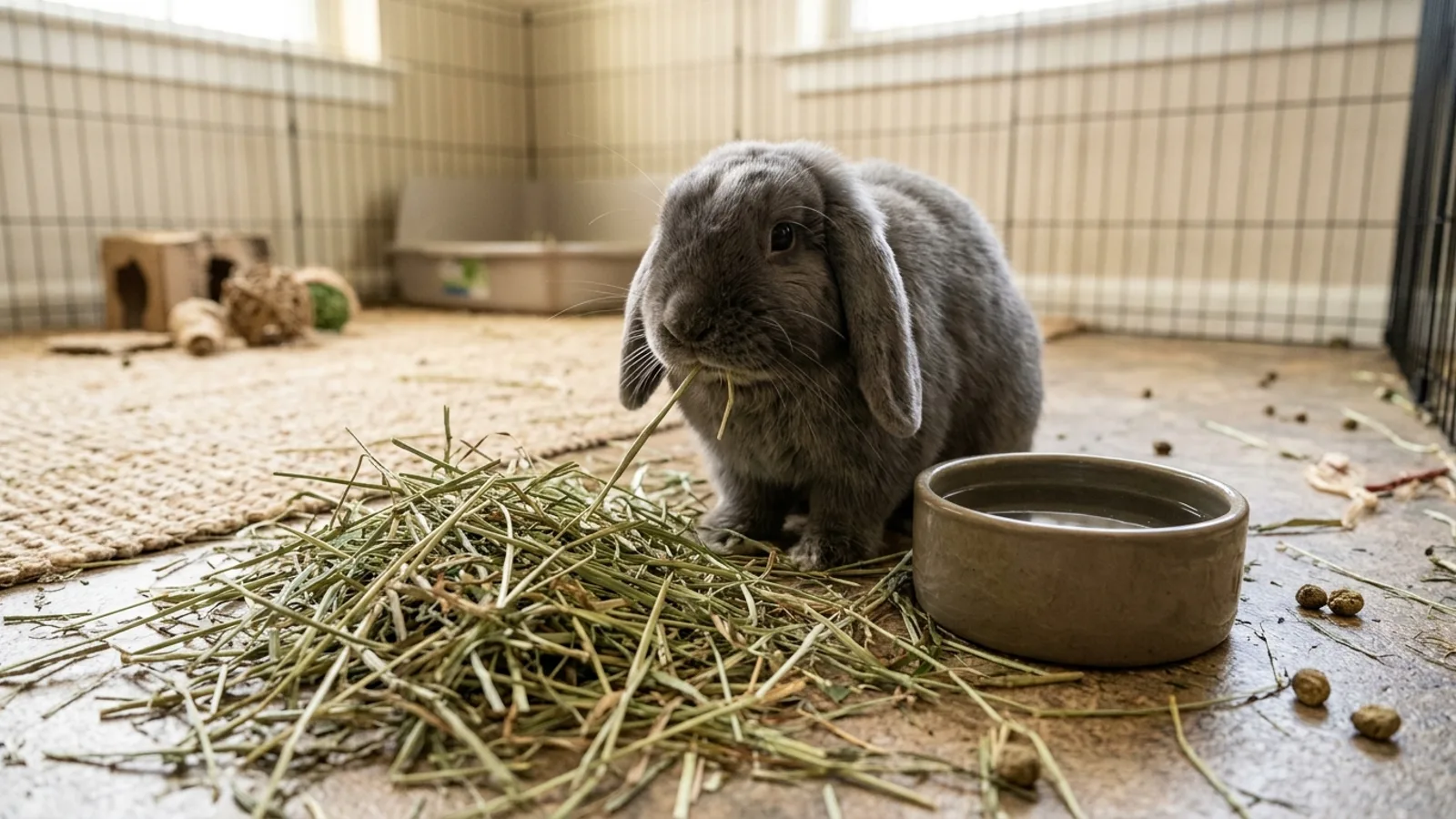
A messy rear is usually not true diarrhoea. MSPCA-Angell notes that rabbits rarely have truly liquid droppings; far more often, owners see soft, sticky cecotropes stuck to the bottom and tail, often with a strong smell, while normal pellets keep coming too.
Why cecotropes go uneaten
- Diet. MSPCA-Angell links soft cecotropes to an upset in the gut's bacteria (cecal dysbiosis), usually from foods high in sugar and starch: fruit, bread, crackers, cereal, commercial treats and pellet mixes, and in some rabbits carrots. Our safe foods for rabbits guide lists lower-sugar options.
- Too few hay meals. The same article recommends more grass hay such as timothy, orchard grass or oat hay as part of the fix, and says it can take days to weeks for cecotropes to return to normal.
- Trouble reaching the rear. A rabbit that is overweight, stiff or sore may not be able to bend round to eat them. Your vet can check for this.
True diarrhoea is different
Watery droppings, with no normal pellets, are an emergency. The Merck manual calls diarrhoea in a rabbit of any age "a serious warning sign of illness," and describes mucus-covered diarrhoea in mucoid enteritis.
Keep the bottom clean
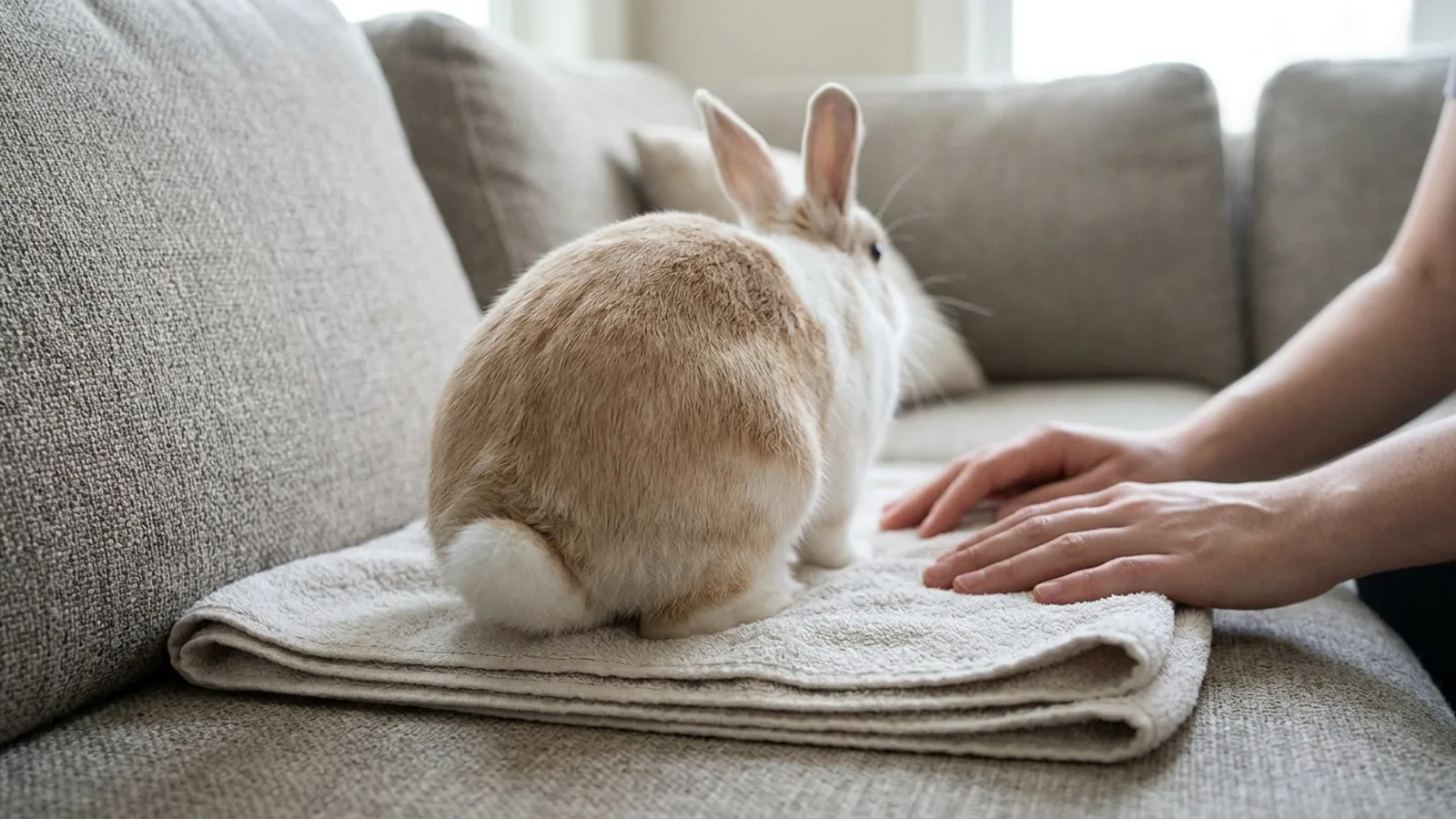
Stuck droppings and urine attract flies. The RSPCA warns that flystrike, when flies lay eggs on soiled fur and maggots hatch, is often fatal, and advises checking the rear end twice a day, especially in warm weather, and cleaning toilet areas regularly. If you find a dirty bottom, ask your vet how to clean it safely and what's causing it.
A 30-second daily litter tray check
The RSPCA recommends checking appetite, drinking, droppings and weight every day. Here's a quick routine for the droppings part:
- Look before you clean. Are there plenty of droppings since yesterday?
- Check the shape. Round and even, or small, misshapen or mixed sizes?
- Check the texture. Dry and firm, or soft, sticky or wet?
- Look for leftovers. Any grape-like clusters of cecotropes lying around?
- Check the rabbit. A quick look at the bottom and tail for stuck droppings.
- Clean and refill. Fresh litter and a big pile of hay, so tomorrow's check starts clean.
If anyone else looks after your rabbit while you're away, show them this routine. The RSPCA says the daily checks should carry on when you're not there. For the rest of a healthy routine, see our rabbit care for beginners guide.
How diet keeps rabbit droppings healthy
Almost every source above comes back to the same thing: fibre. Heatley recommends a diet of mainly hay and vegetables, avoiding sugary treats, and plenty of fresh water. VCA lists a diet high in carbohydrates, such as pellets, treats, carrots and fruit, and low in hay among the causes of GI stasis.
- Unlimited fresh grass hay, every day.
- Leafy greens daily (MSPCA-Angell suggests them as part of the fix for soft cecotropes), and fresh water always available.
- Pellets in small amounts; ask your vet how much suits your rabbit's size.
- Fruit as an occasional treat, like the small portions in our bananas for rabbits guide.
Frequently asked questions
What does healthy rabbit poop look like?
Round, dry, firm pellets of an even size, and plenty of them every day. Softer, shiny grape-like clusters (cecotropes) are also normal, but your rabbit should eat those.
Is it normal for my rabbit to eat its poop?
Yes. Rabbits eat their cecotropes, usually straight from the bottom in the early morning, to absorb nutrients made in the gut. It's an essential part of how they digest food.
Why is my rabbit's poop small?
Small or dark droppings can mean the gut is slowing down, often because your rabbit is eating less from pain, stress or illness. Vets list them as an early sign of GI stasis, so call your vet the same day.
What if my rabbit hasn't pooped in hours?
Treat it as urgent. The RSPCA says to talk to your vet straight away if droppings stop, and VCA warns that a rabbit that stops eating can become seriously ill within hours.
The takeaway
Normal rabbit poop is round, dry, even and plentiful, and your rabbit quietly eats the soft cecotropes. Small, few or no droppings, uneaten sticky clusters, or anything watery are the changes to act on, and none or watery means a vet straight away. Your next step: tomorrow morning, look at the litter tray before you clean it, so you know what normal looks like for your rabbit.
This article is for general information and is not a substitute for advice from a veterinarian. If your rabbit stops eating or passes no droppings, contact your vet straight away.