Rabbit Dental Problems: Signs, Causes and When to See a Vet
Rabbit dental problems are common in pet rabbits, and they usually start quietly. A rabbit that eats a little less, leaves its hay, or has a damp chin may already be in pain, long before you can see anything wrong with its front teeth.
The good news is that most teeth trouble is linked to diet, so a lot of it can be prevented, and caught early with a quick weekly check. Below are the signs to watch for, what causes them, how vets treat them, and when to pick up the phone.
Why rabbit teeth go wrong
A rabbit's teeth never stop growing. The RSPCA says the front teeth grow around 2–3 mm every week, and VCA Animal Hospitals puts normal growth at roughly 1 cm a month. That growth is meant to be worn down by hours of chewing tough, fibrous grass and hay.
When the wear doesn't keep up, or the teeth don't meet properly, they overgrow. VCA notes that front teeth that don't meet can grow as much as 1 mm a day. The back (cheek) teeth can form sharp points that cut the tongue and cheeks, and trouble at the roots can show up as a lump on the jaw or watery eyes.
It's not a rare problem. A 2025 study in Veterinary Record looked at 2,219 rabbits with rabbit dental disease seen at UK vet practices and found that the cheek teeth alone were affected in 77.8% of cases. Those are the teeth you can't see at home, which is why the indirect signs below matter so much.
Signs of dental problems in rabbits
Rabbits hide pain well, so look for changes in eating, droppings and grooming rather than waiting to spot a long tooth. In the Veterinary Record study, reduced food intake was the most often recorded sign (25.1% of cases), followed by fewer droppings (10.9%) and eye discharge (10.6%). Notably, fewer than half the cases (49.4%) had any clinical sign recorded at all.
| Where to look | What you might notice |
|---|---|
| Food bowl and hay rack | Eating less, dropping food, picking only soft foods and leaving hay |
| Litter tray | Fewer or smaller droppings, or none |
| Chin and front paws | Dribbling, wet or stained fur around the chin |
| Eyes | Watery eyes or discharge |
| Jaw and face | A lump along the jaw or under an eye |
| Coat | Scruffy fur, because grooming hurts |
| Front teeth | Very long, crooked, curling or overlapping teeth |
| Weight | Gradual weight loss |
| Mouth | Pawing at the mouth |
These signs come from the RSPCA's and VCA's lists. Any one of them is a reason to book a vet check; several together, or a rabbit that stops eating, is urgent.
What causes rabbit teeth problems?
Not enough hay
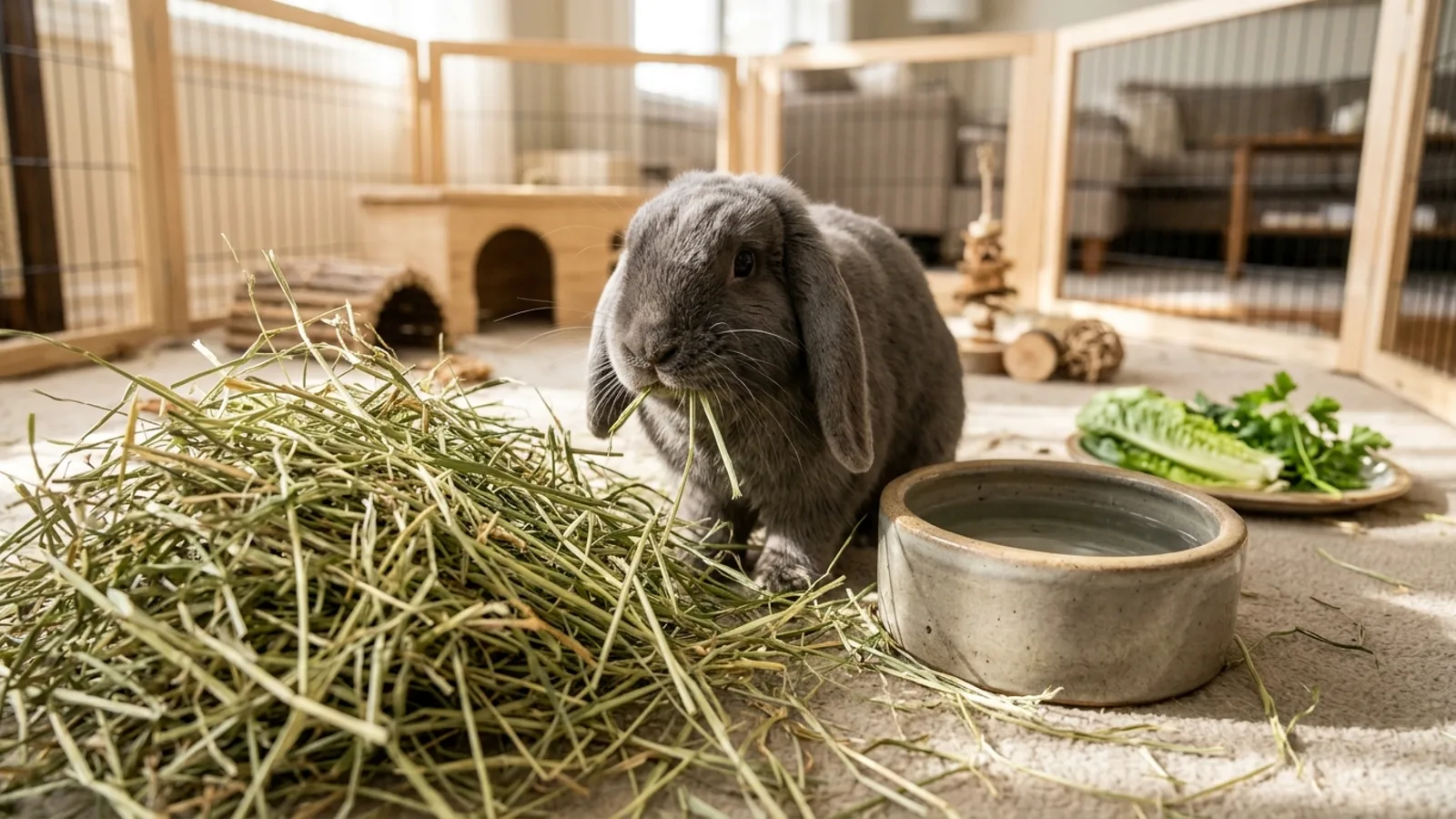
Diet is the big one. The RSPCA says the health of a rabbit's teeth depends largely on what it eats, and that hay and grass should make up about 85% of the diet because they wear the teeth down. VCA explains that pellets don't wear teeth the way long-strand hay does, and some pet rabbits eat no hay at all. Pellets, vegetables and fruit need far less chewing, which is why our guide to carrots for rabbits treats them as a small extra, not a meal.
Genetics and face shape
Some rabbits are born with teeth that don't line up (malocclusion). VCA highlights dwarf and lop-eared breeds as more prone, and the RSPCA notes that certain breeds and genetic conditions raise the risk.
Injury
The RSPCA lists damaged teeth among common dental problems. If your rabbit chips or breaks a tooth, have a vet look at it even if your rabbit seems fine.
Age and other illness
Problems can build slowly, so a rabbit that had a healthy mouth when young can still develop them later. That's one reason the RSPCA recommends having the teeth checked at every yearly vet visit.
How vets diagnose and treat rabbit dental disease
Your vet will look in the mouth, but the cheek teeth sit deep and are hard to see in an awake rabbit. VCA strongly recommends skull X-rays to check tooth position, roots and hidden abscesses.
Treatment depends on what's found, and your vet decides the plan. In general terms, VCA describes:
- Trimming or filing overgrown teeth with a dental burr, usually under sedation or anaesthetic. Never use nail clippers or wire cutters at home: VCA warns they can split teeth and lead to abscesses.
- Removing teeth that keep causing trouble, which can be a long-term fix and is the only option when roots are abscessed.
- Pain relief and, if there is infection, other medicines chosen by the vet.
- Support at home, such as syringe-feeding a recovery food if the rabbit won't eat straight away, which your vet can show you how to do.
Many rabbits with overgrown rabbit teeth need repeat visits. VCA notes that some need dental checks and trims every 4 to 12 weeks, so ask your vet what schedule suits your rabbit.
A 2-minute weekly teeth check at home
The RSPCA advises checking the front teeth at least once a week. Pair it with a few other quick checks:
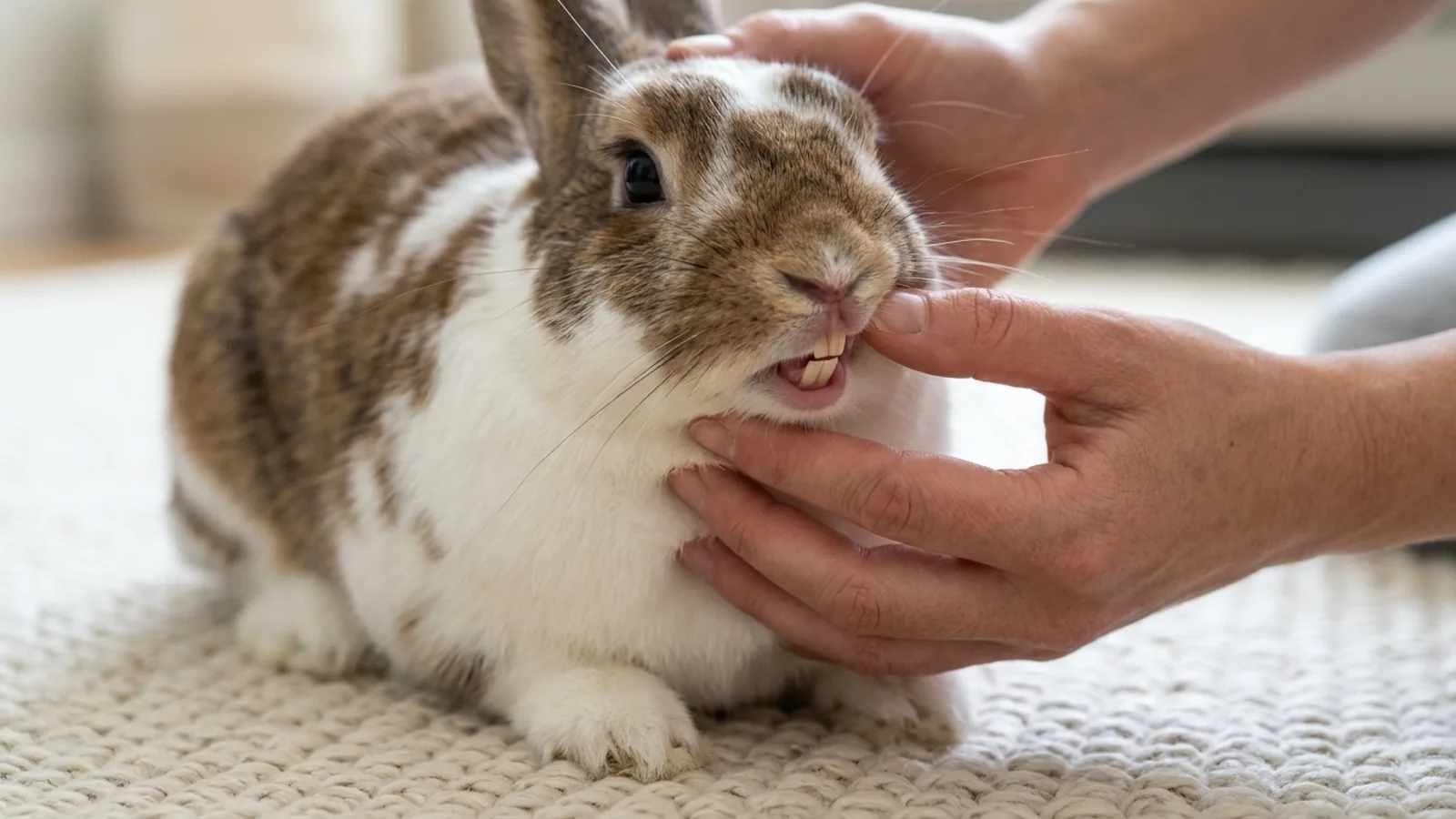
- Front teeth. Gently lift the upper lip. Teeth should be creamy off-white, even, and the upper pair should sit just in front of the lower pair. Don't try to trim them yourself.
- Chin and paws. Feel for wet, matted or stained fur.
- Jaw. Run your fingers along both sides of the jaw and under the eyes for lumps.
- Eyes. Look for watering or crusty discharge.
- Hay pile and litter tray. Is the hay going down? Are there plenty of round droppings?
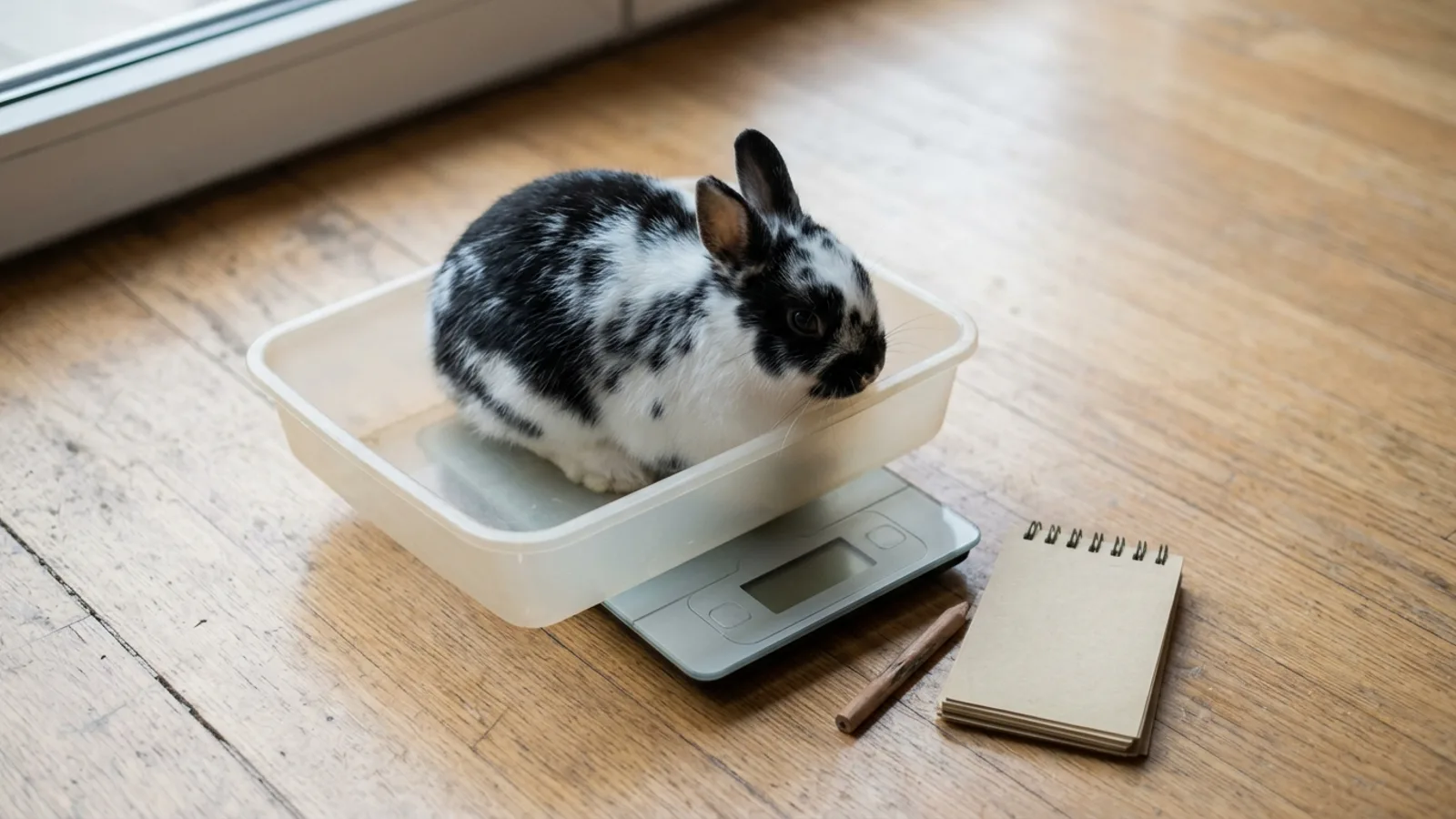
- Weight. Weigh your rabbit on a kitchen scale and note it down. Slow weight loss is easy to miss by eye.
Done every week, these notes give your vet a clear picture if something changes. For the rest of the routine, see our rabbit care for beginners guide.
When rabbit dental problems become an emergency
Call your vet the same day if your rabbit stops eating, or passes fewer droppings or none. The RSPCA warns these can be signs of serious illness, and pain from dental disease can contribute to gut stasis, when the digestive system slows or stops. Don't wait to see if it passes.
Book a prompt appointment (rather than an emergency one) for any of the other signs in the table above, and keep your rabbit's yearly health check, where the RSPCA says dental disease can be spotted early.
How to prevent rabbit dental problems
- Unlimited hay, always. Fresh hay and grass should be most of the diet.
- Pellets in small amounts. The RSPCA says nuggets, fruit and vegetable treats should be small amounts, because they need less chewing.
- Treats as treats. Fruit and sugary vegetables need little chewing; see our list of safe foods for rabbits for better options.
- Time to forage. The RSPCA recommends letting rabbits graze and forage through the day.
- Regular checks. Weekly at home, yearly with your vet, and more often if your rabbit has had dental problems before.
Frequently asked questions
How do I know if my rabbit has teeth problems?
Watch the hay pile, the litter tray and the chin. Eating less, fewer droppings, dribbling, watery eyes and weight loss are the most common clues, and many rabbits show them before anything looks wrong with the front teeth.
Can I trim my rabbit's teeth at home?
No. VCA warns that clippers can crack teeth and cause abscesses, and the RSPCA says only a vet should correct overgrown or misaligned teeth.
Can rabbit dental disease be cured?
It depends on the cause. VCA says removing teeth that keep causing trouble can be a long-term solution, while other rabbits need regular trims for life. Your vet can tell you what to expect for your rabbit.
Do chew toys wear down rabbit teeth?
Toys are fine for enrichment, but they don't replace hay. The RSPCA and VCA both point to fibrous hay and grass as what keeps teeth worn down, including the cheek teeth you can't see.
The takeaway
Rabbit dental problems are common, often hidden at the back of the mouth, and closely tied to how much hay your rabbit eats. Keep hay unlimited, watch for small changes in eating, droppings and grooming, and let your vet handle any trimming. Your next step: this week, weigh your rabbit, check its front teeth and chin, and write down what you find so you have a baseline.
This article is for general information and is not a substitute for advice from a veterinarian. If your rabbit stops eating or passes no droppings, contact your vet straight away.