Signs of a Sick Rabbit: When Your Rabbit Needs a Vet
The most important signs of a sick rabbit are simple: your rabbit stops eating, stops pooping, or sits hunched and quiet when it would normally be busy. Any of those means you should call a vet the same day, often within hours, not wait to see if it passes.
Rabbits are prey animals, and the RSPCA points out that they may hide signs of pain or illness. By the time a problem is obvious, it has often been going on for a while. This guide lists the warning signs, sorts them into "go now" and "call today," and shows you how to get ready so the vet visit goes smoothly.
Why rabbits need a vet sooner than you'd think
A cat or dog that skips breakfast can usually wait until tomorrow. A rabbit often can't. The House Rabbit Society's Rabbit.org says rabbits can deteriorate quickly and advises calling a vet right away if a rabbit stops eating or pooping for 8 hours or more. It describes GI stasis, where the gut slows down or stops, as one of the most common and serious rabbit emergencies, and warns that a rabbit can die within 24 hours from it.
The Scottish Government's pet rabbit welfare guidance makes the same point: rabbits can become worse very quickly, so you need to act promptly, and you should consult a vet if your rabbits show any signs of illness, injury, pain or a change in their behaviour.
The practical rule: when you're unsure, phone. A two-minute call to the clinic costs far less than waiting too long.
Rabbit emergency signs: go to a vet now
These are the rabbit emergency signs that need a vet straight away, day or night. They come from Rabbit.org's "Is Your Rabbit Sick?" guide and the Scottish welfare guidance:
- Not eating, especially with lethargy. Rabbit.org calls loss of appetite plus lethargy the biggest indicator of an emergency, and notes that even one missed meal can be a sign of serious illness.
- No droppings. The Scottish guidance says not eating or not passing faeces should be treated as an emergency.
- Breathing through the mouth. Rabbits normally breathe through their nose; mouth-breathing is an emergency.
- Loud tooth grinding with a hunched, tense posture. This is a sign of pain, different from the soft "tooth purring" of a content rabbit.
- A swollen, tight belly (bloat).
- Diarrhea (watery or unformed droppings, not just a few sticky cecotropes).
- Maggots or flystrike. The Scottish guidance says flystrike can kill a rabbit in a matter of hours.
- Head tilt, loss of balance or seizures.
- Collapse, bleeding, an open wound, a bad fall or a suspected broken bone.
- Blood in the urine.
- Ears that feel very hot or unusually cold, which may mean fever or low body temperature.
- Eating something poisonous, such as a toxic houseplant.
Signs your rabbit needs a vet soon (call today)
These signs your rabbit needs a vet aren't always life-threatening in the next few hours, but they shouldn't wait for next month's check-up. Book an appointment within a day or two, and treat them as urgent if your rabbit also eats less:
- Smaller, fewer or misshapen droppings, or droppings strung together with fur.
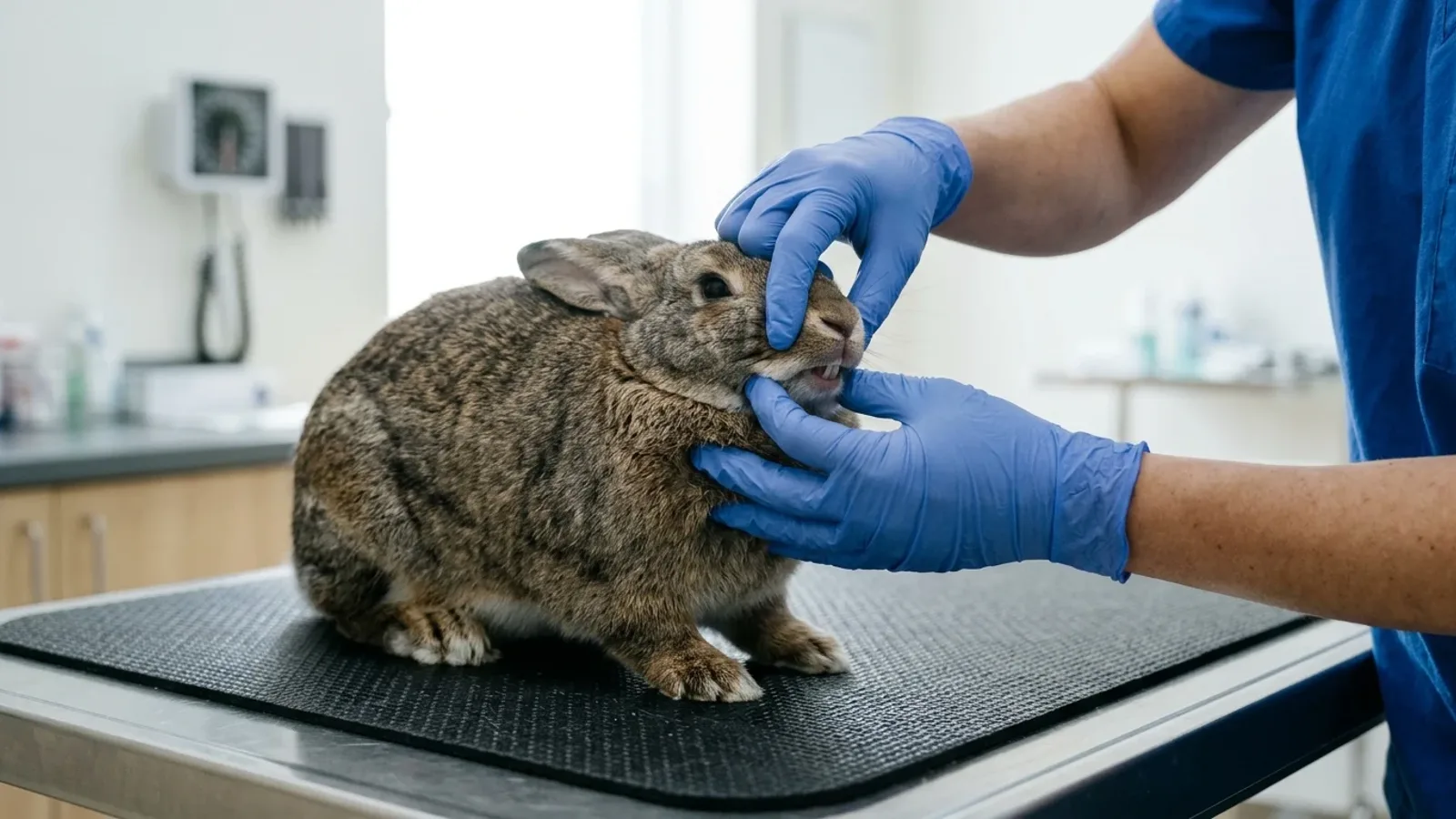
- A wet chin, drooling, or dropping food, which Rabbit.org links to dental problems.
- Runny eyes or nose, sneezing that keeps happening, or noisy breathing. The Scottish guidance warns that eye and nose discharge can point to a respiratory infection, which can lead to pneumonia.
- Scratching, head shaking or crusty material in the ears, often caused by mites.
- A dirty, wet or urine-scalded bottom. In warm weather, check it twice a day because of the flystrike risk.
- Straining to pee, white sludgy urine, or peeing outside the litter box when your rabbit was reliably trained.
- New lumps or bumps under the skin.
- Sore, bare or red skin on the heels (sore hocks).
- Weight loss, a dull or matted coat, or a rabbit that stops grooming.
- A change in personality: hiding, sudden grumpiness or less interest in you and its toys.
Knowing what your rabbit's normal body language looks like makes that last point much easier to spot. Our guide to bunny behavior explains the everyday signals.
Is my rabbit sick? A quick triage table
If you're asking "is my rabbit sick?", this table sorts common signs by how fast to act. It's a guide, not a diagnosis: if your rabbit shows several signs at once, or you're worried, go up a level.
| What you notice | How fast to act |
|---|---|
| No eating or no droppings (8+ hours, per Rabbit.org) | Emergency: call now |
| Hunched, tooth grinding, bloated belly | Emergency: call now |
| Mouth-breathing, collapse, seizures, head tilt | Emergency: call now |
| Diarrhea or maggots | Emergency: call now |
| Eating less, fewer or smaller droppings | Same day |
| Wet chin, drooling, dropping food | Within a day or two |
| Runny eyes or nose, repeated sneezing | Within a day or two |
| Ear scratching, crusty ears, dirty bottom | Within a day or two (dirty bottom: same day in warm weather) |
| Slow weight loss, sore hocks, a new lump | Book an appointment this week |
How to spot problems early: a 2-minute daily check
The RSPCA says to monitor your rabbits every day, check front teeth and nails at least once a week, and take them for a vet check-up at least once a year. The Scottish guidance adds a monthly weigh-in, since weight loss can signal a dental or other health problem. A simple routine looks like this:
- Morning: does your rabbit come for its greens with the usual enthusiasm?
- Litter box: are there plenty of round, even droppings since yesterday? Our guide to normal rabbit poop shows what healthy droppings look like.
- Bottom: clean and dry? (Twice a day in warm weather.)
- Face: clear eyes, dry nose, dry chin.
- Movement: hopping normally, no limping or tilting.
- Weekly: front teeth and nails. Monthly: weigh your rabbit and write it down.

When to take a rabbit to the vet for routine care
Not every vet visit should be triggered by a problem. Knowing when to take a rabbit to the vet for prevention catches issues before they show:
- Yearly check-up. Both the RSPCA and Rabbit.org recommend at least an annual health check.
- Vaccinations. The RSPCA advises vaccinating against myxomatosis and rabbit (viral) haemorrhagic disease, including RHD2; your vet will say how often. Rabbit.org notes that yearly protection against RHDV2 is needed in the US and many other countries.
- Dental checks. The Scottish guidance recommends a vet examines the back teeth ideally every 6 months.
- Neutering. Discuss timing with your vet; our rabbit care for beginners guide covers the basics.
Find a rabbit-savvy vet before you need one, and ask them what to do in an emergency outside opening hours. Save that number in your phone.
What to do while you get to the vet
- Phone first so the clinic can tell you how urgent it is and get ready.
- Don't give any medicine at home unless the vet tells you to. The Scottish guidance says to use only medicines that have been prescribed or recommended by a vet.
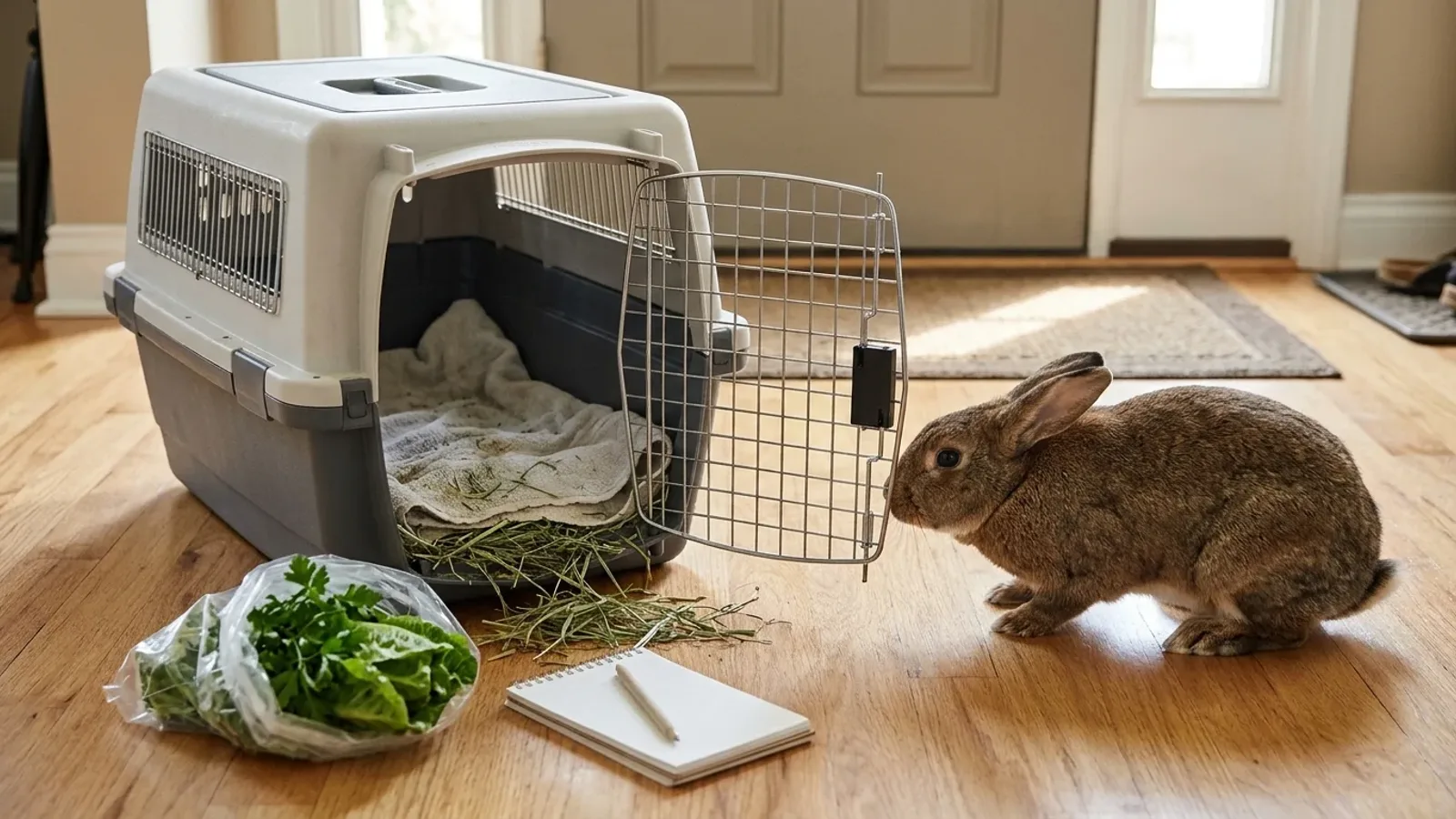
- Keep your rabbit calm and at a comfortable temperature in a secure carrier lined with a towel and some hay.
- Bring information: when your rabbit last ate and pooped, any changes in diet, a photo of recent droppings, and its normal weight if you know it.
Frequently asked questions
How do I know if my rabbit is dying?
Severe lethargy, not eating, collapse, mouth-breathing, seizures or cold ears are all emergency signs. Don't try to judge it at home: call a vet or an emergency clinic straight away. Rabbit.org's advice is that early veterinary care saves lives.
How long can a rabbit go without eating?
Not long. Rabbit.org advises calling a vet right away if a rabbit hasn't eaten or pooped for 8 hours or more, and the Scottish guidance treats not eating as an emergency.
Is sneezing in rabbits serious?
The odd sneeze from dust can be normal. Repeated sneezing, runny eyes or nose, or noisy breathing need a vet, as they can point to a respiratory infection.
What are the signs of pain in a rabbit?
A hunched posture, loud tooth grinding, lethargy and not eating. The RSPCA also lists limping, dribbling and a swollen jaw among signs of pain or illness. Rabbit.org says any noticeable pain should be treated as an emergency.
The takeaway
The signs of a sick rabbit are often quiet: less eating, fewer droppings, a hunched rabbit in a corner. Because rabbits hide illness and can go downhill within hours, treat those changes as urgent and phone your vet rather than waiting. Your next step today: save your rabbit vet's number and an out-of-hours emergency clinic in your phone, and start the 2-minute daily check above.
This article is for general information and is not a substitute for advice from a veterinarian. If you think your rabbit is unwell, contact your vet straight away.