Why Does My Rabbit Bite Me? 7 Causes and How to Stop It
Why does my rabbit bite me? Most often because they're scared, defending their space, driven by hormones, or in pain. Rabbits are prey animals, and the RSPCA (Australia) describes biting as usually a last resort from a rabbit that feels frightened or stressed.
The good news: rabbit biting nearly always has a cause you can find and change. This guide covers the seven common causes, how to tell a friendly nip from a real bite, what to do in the moment, and a step-by-step plan to stop it.
Nip or bite? Read the signal first
Not every tooth on skin is aggression. The RSPCA (UK) says a gentle nip may mean your rabbit needs space or feels uncomfortable, and can also be affectionate or a request for attention, while a hard bite often means fear or stress and an attempt to protect themselves.
| What happens | Likely meaning | What to do |
|---|---|---|
| Light nip while you stroke them | "Enough," or grooming you back | Pause and let them choose |
| Nip when you block their path | "Move out of the way" | Step aside; it's not a fight |
| Hard bite when you reach in or lift | Fear or defending territory | Stop lifting; change how you approach |
| Lunge, growl, then bite | Warning ignored | Back off; watch for earlier signs next time |
| Sudden biting in a calm rabbit | Possible pain | Book a vet check |
Before most bites there are warnings. The RSPCA (Australia) lists crouching, hunching, freezing, flattened ears and running away as signs to back off. Our guide to bunny behavior covers the full body-language chart.
Why do rabbits bite? 7 common causes
1. Fear of being picked up or held
The RSPCA (Australia) notes that being picked up or hugged is not a normal thing for rabbits, and a held rabbit can't escape. Clinical animal behaviorist Rosie Bescoby, writing for Petplan, says being chased, picked up or restrained can make a rabbit feel threatened.
2. Defending territory
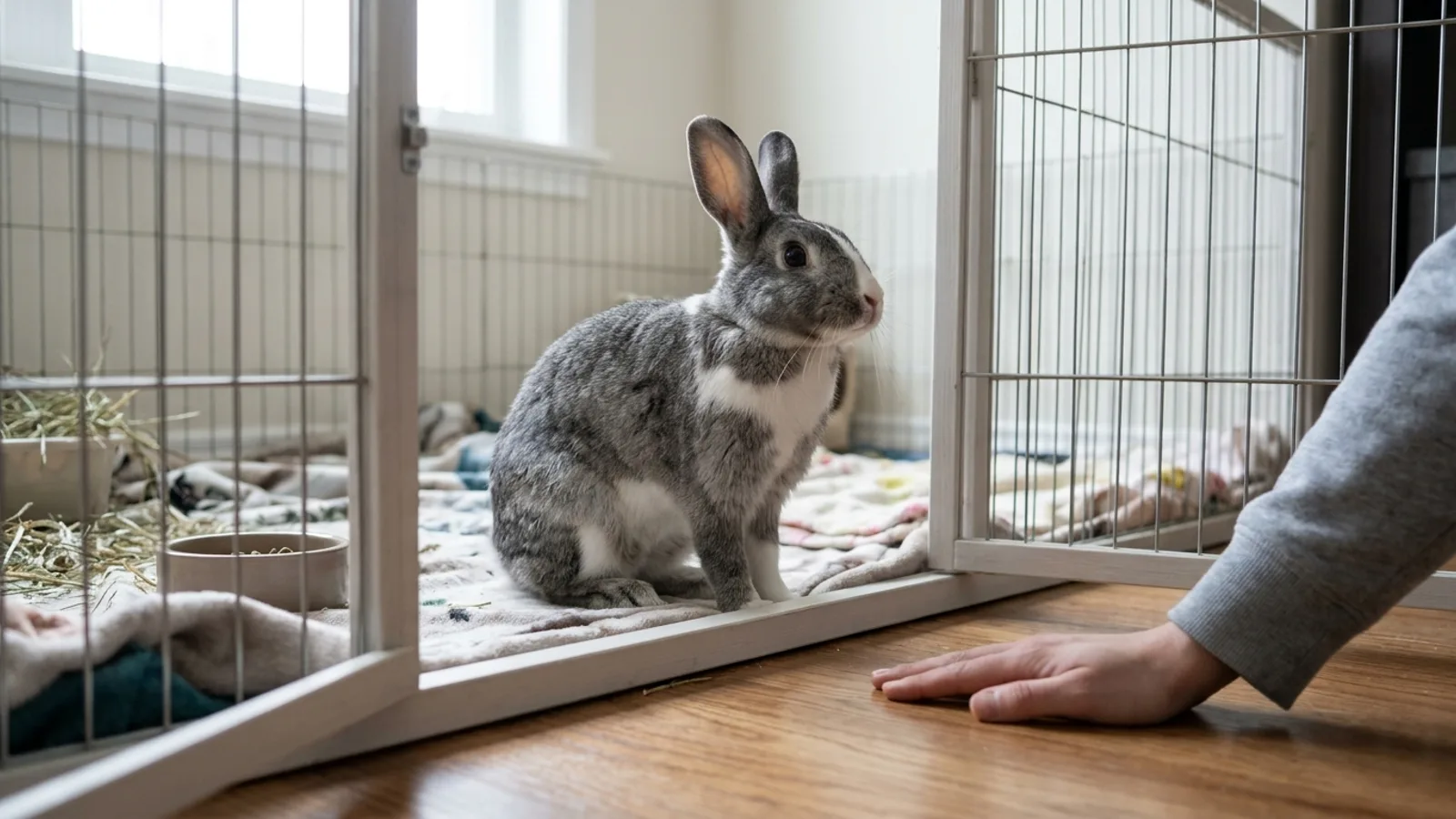
Rabbit.org (House Rabbit Society) says rabbits can be very territorial, so reaching into their cage or pen can provoke a bite. The RSPCA (Australia) adds that this is especially common in unneutered males.
3. Hormones
Rabbit.org says the biggest behavior change happens at around 4 months, and that circling, mounting and biting are classic signs of a sexually frustrated rabbit. Petplan's behaviorist notes rabbits become more protective of territory, food and mates once mature.
4. Pain or illness
Rabbit.org says rabbits often bite out of pain, and Petplan's behaviorist lists dental, joint and abdominal problems as possible causes. The RSPCA (Australia) advises a vet exam for any previously calm rabbit that suddenly starts biting.
5. "Move, please"
Rabbit.org notes a nip can simply mean "back off" or "get out of my way." It's communication, not a grudge.
6. A hand in front of the face
Rabbits have poor close-up vision. Rabbit.org says a human hand in front of a rabbit's face can be very startling, and an eager eater may also nip at fingers around feeding time if they aren't sure when food is coming.
7. Biting has worked before
Rabbits learn by association. Petplan's behaviorist explains that if biting makes you back off or put them down, a rabbit may bite sooner, with fewer warnings, next time.
What to do the moment your rabbit bites
- Stay calm. Rabbit.org suggests a short, high-pitched squeal so your rabbit learns the nip hurt, then stay still rather than jerking away.
- Never hit, tap or shout. Rabbit.org is emphatic that you should never hit or tap a rabbit for biting, and the RSPCA (UK) says never to shout at or punish a rabbit. The RSPCA (Australia) warns punishment destroys the bond.
- Note the context. Where were your hands? Were you lifting, cleaning, or feeding? That tells you the cause.
- Clean the wound. Wash a bite that breaks the skin, and see a doctor if it becomes red, swollen or painful.
How to stop a rabbit from biting: a 6-step plan
- Rule out pain. Petplan's behaviorist recommends a vet check for any rabbit showing aggression. It's the first step, not the last.
- Neuter or spay. Rabbit.org says it can dramatically reduce aggressive behavior, though hormones can take up to a month to settle. The Merck Veterinary Manual also notes neutering helps decrease aggression. Your vet will advise on timing.
- Stop reaching in. Rabbit.org suggests letting your rabbit come out on their own and cleaning the cage while they're out. The RSPCA (Australia) suggests distracting them with a treat or giving them a hiding spot during cleaning.
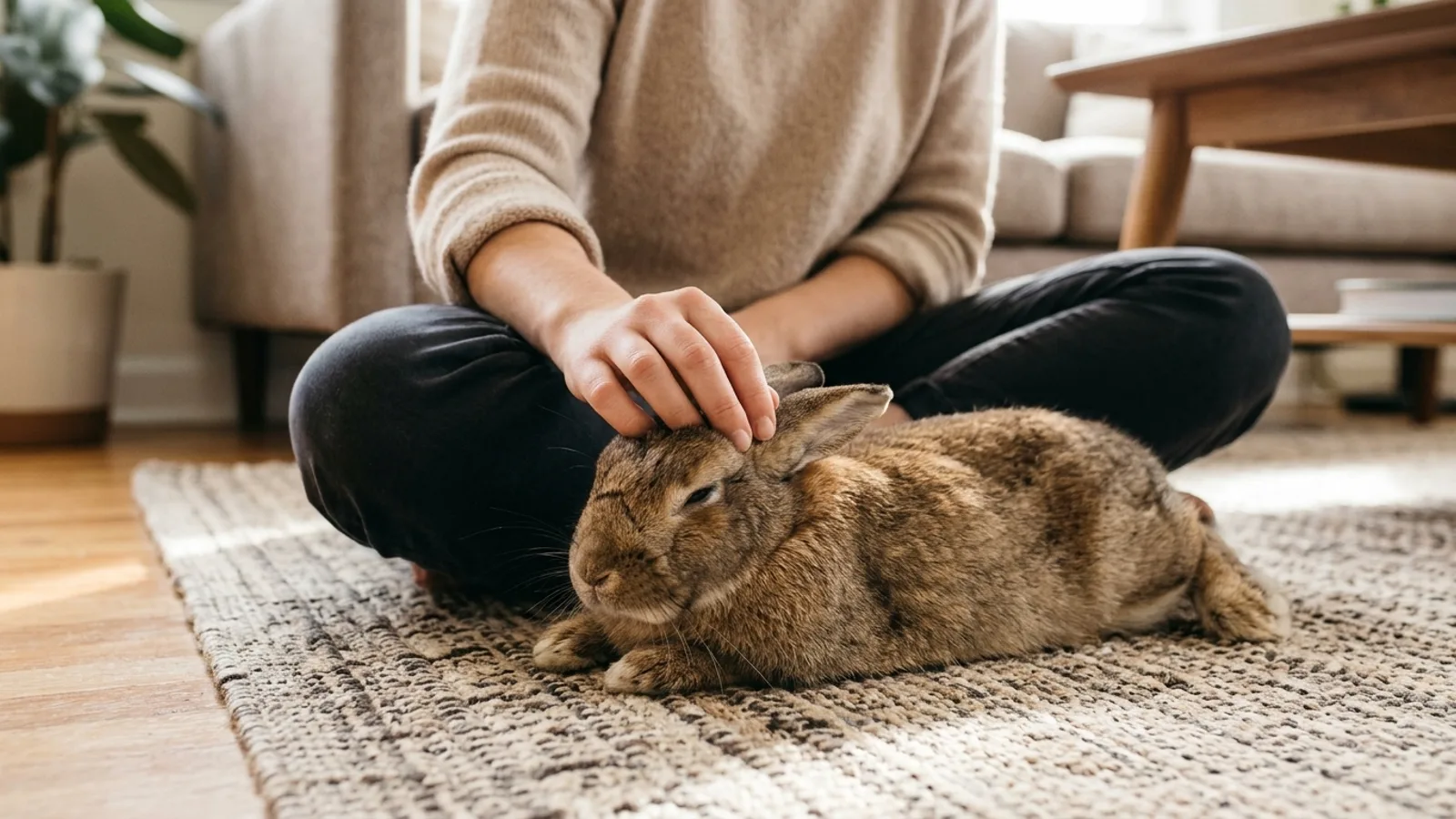
- Approach from above, not in front. Keep your hands above the head and away from the nose, and stroke from the forehead back (Rabbit.org).
- Build trust on the floor. The RSPCA (Australia) recommends daily floor time where the rabbit approaches and controls the contact, rewarding calm behavior with a couple of small treats.
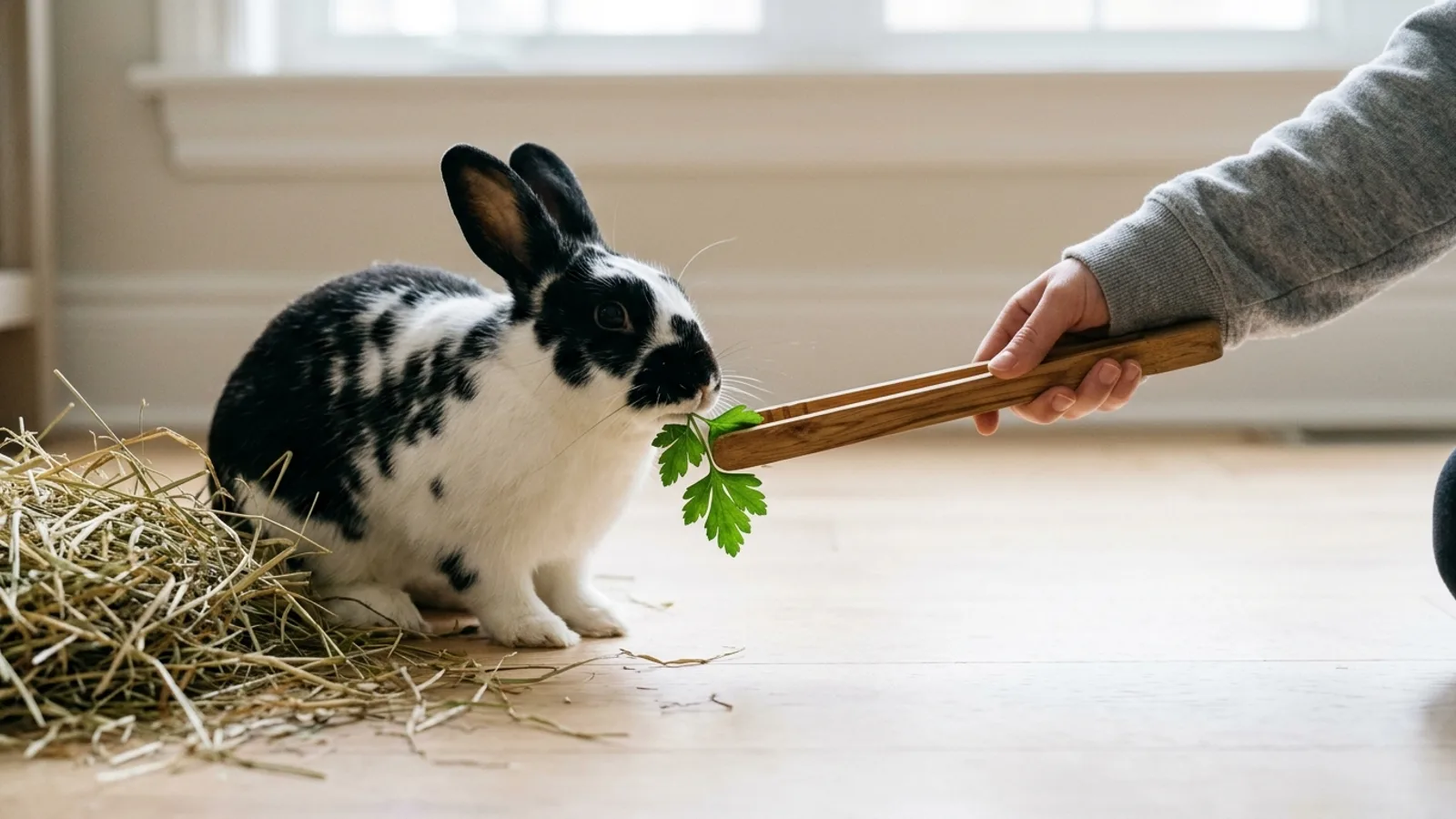
- Feed on a schedule. Rabbit.org suggests regular mealtimes and, for nippy eaters, offering treats with wooden spoons or tongs.
Enough space and daily exercise matter too. The RSPCA (Australia) links stress-related biting to small, boring enclosures; see our rabbit care for beginners guide for setup basics.
Common mistakes that make biting worse
- Forcing cuddles. The RSPCA (UK) advises handling and health checks with all four feet on a stable surface.
- Ignoring the thump. The RSPCA (Australia) says territorial bites often follow warning thumps that were ignored.
- Taking it personally. Rabbits don't bite out of spite or jealousy, according to the RSPCA (Australia).
- Overdoing treats. The RSPCA (Australia) suggests a couple of treats over about five minutes a day is enough for trust-building.
Frequently asked questions
Why does my rabbit bite me when I pet him?
Often it's "that's enough" or a sign the touch is in the wrong spot. The RSPCA (UK) says a gentle nip can mean your rabbit needs space or feels uncomfortable. Keep petting short, stick to the forehead and back, and stop before they leave.
Why does my rabbit bite my clothes or ankles?
Rabbit.org links circling, nipping and mounting to hormones, and notes a nip can mean "get out of my way." If it comes with circling or spraying, ask your vet about neutering.
Do rabbit bites hurt?
Yes, a hard bite can break skin. Wash it well and see a doctor if it gets red, swollen or painful.
Will my rabbit grow out of biting?
Not on its own if the cause stays the same. Neutering, a vet check and changing how you handle them usually make the difference.
The takeaway
Rabbit biting is a message, usually fear, territory, hormones or pain. Find the cause, rule out illness, neuter, stop reaching into their space and let your rabbit come to you. Your next step: for the next week, sit on the floor for 10 minutes a day, offer one small treat, and let your rabbit decide how close to come.